
How Is Internet Access Changing?

On 3S.INFO, we explore what local / sovereign / restricted / autonomous internet means, why it exists, and how it affects user behavior.

Last Updated: 27 march 2026

Internet access under restrictions is a complex and multi‑layered issue. Restrictions can range from targeted blocking of specific websites to a complete disconnection of a country from the global network. On 3S.INFO, we explore what local / sovereign / restricted / autonomous internet means, why it exists, and how it affects user behavior. How does it work technically, what methods are used, and how do different countries approach this issue?

Internet Access Under Various Restrictions 

Depending on the context, these terms describe different principles of network organization: from a small office to an entire nation.

Local / Sovereign / Restricted / Autonomous Internet: A Comparison of Concepts

Term What It Means Where It Is Found Key Purpose
Local Internet / Local Area Network (LAN) A small network connecting computers in a single location (apartment, office, school). Your internal “world in miniature.” Homes, schools, corporate offices. Connecting devices to share files, printers, and provide shared access to the global internet.
Sovereign Internet A national internet segment (e.g., Runet) that the state can autonomously control and manage, even if disconnected from the global network. In the legislation of Russia (the “Sovereign Runet” law), China, Iran. Protecting the national internet segment from external threats and ensuring its stable operation in critical situations.
Restricted Internet (Intranet) A private network that uses internet technologies but is accessible only to employees of a single organization. Internal portals of companies, banks, government agencies. Secure exchange of confidential information within an organization.
Autonomous Internet A synonym for sovereign internet in the Russian context. It refers to the ability of an entire national infrastructure to operate independently if cut off from the outside. Discussed during the adoption of the “Sovereign Internet” law in Russia. The technical capability for domestic networks to operate without access to global DNS root servers.

Let’s break it down in more detail.

1 of 3
  • Local Area Network

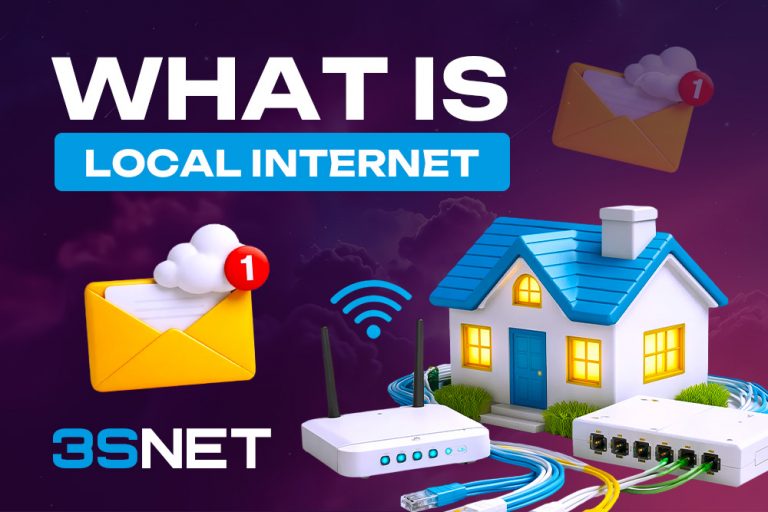
    This is the simplest form of connecting devices. If you have a computer, laptop, and printer all connected to the same Wi‑Fi router at home, that’s your local network. Its primary purpose is to enable fast data exchange between devices within a single room or building without needing to go out to the wider internet.

    Read more
  • Sovereign / Autonomous Internet

    These concepts are closely related and are often used as synonyms. Their core idea is control. The state builds a technical infrastructure (its own traffic exchange points and national domain name system) that enables the management of traffic within the country.

    Why is this needed? According to its developers, it is meant to ensure that even if foreign countries or corporations disconnect the country’s infrastructure from the global network, all domestic services (government portals, online banking, email) will continue to function.

    International experience: China has pursued the path of creating the “Great Firewall,” which filters traffic at the border, building a powerful ecosystem of local alternative services (replacements for Google, YouTube) within the country. Iran has also attempted to create a fully isolated network but ultimately focused on selective filtering and monitoring.

    Read more
  • Intranet

    Unlike a sovereign internet, which covers an entire country, a restricted internet is created for the needs of a single company. Imagine an internal website where you can find the director’s orders, a knowledge base for employees, and a corporate chat. Accessing it from home without a special password is impossible.

    Read more

What about the Alternative Internet? That’s a separate, big topic. While the four concepts described above are tied to geography and jurisdiction (from a small office to an entire country), the “alternative internet” (such as Tor, I2P) is about technology.

These are decentralized networks built on top of the regular internet. They are not owned by any state or corporation and use complex encryption to ensure maximum anonymity for users. 

Local, sovereign, and autonomous internet are three different models that transform internet access on three levels: geographic (where you are), legal (who controls it), and technological (how data is transmitted). The main difference between them lies in who controls the traffic and the degree of network isolation.

The Difference Between Local and Sovereign Internet 

The term local internet most often refers to a local area network (LAN). Put simply: it’s a closed network within an apartment, office, campus, or company that connects devices to each other and can function without any connection to the global internet. It includes computers, smartphones, printers, servers, and routers, connected by cable or Wi‑Fi within a limited area.

However, “local” internet in the context of modern restrictions can refer to a model of the internet that operates under its own rules, or infrastructure that is isolated from the global internet. This can relate to different aspects: concepts, legislation, and technologies. 

In the context of access restrictions, “local internet” is typically understood as:

A network where users are given access only to a limited set of resources, rather than the entire global internet.
For example:

  • access is only available to sites within the country or within the provider’s network;
  • or only to internal services of a company/campus;
  • external sites are either completely unavailable or strictly filtered according to blocklists.

Essentially, this is restricted internet access. From the user’s perspective, it may seem like the internet is available, but in reality, it is limited to local or permitted resources.

What Is the Sovereign Internet? 

Sovereign internet is a concept that involves creating an independent infrastructure to ensure uninterrupted internet operation within a country. Sovereignty in this context is understood as the right of a state to manage internet infrastructure on its territory, control traffic routing, and register domains.

Sovereign internet is a model in which a state builds and controls its own, maximally autonomous infrastructure for network access within the country.

In simple terms:

  • A national internet “circuit” is created that can continue to function even if connectivity to the global network is partially or completely lost;
  • Key traffic exchange points, backbone channels, routing systems, and the national DNS system are placed under centralized control of state authorities;
  • The state gains the technical ability to manage which resources are available to users and which are blocked or filtered.

The stated goal is typically “protection from external threats” and ensuring the operation of domestic services (government portals, banks, critical infrastructure) under any scenario. The actual effect is increased control over traffic, stronger censorship, and the ability to quickly restrict access to specific services and segments of the global internet. 

Sovereign Internet: Features, Risks, Benefits

Sovereign internet is not some other kind of internet; rather, it is a way for the state to take control of key infrastructure points in order to, if desired, manage access to the network within the country and keep it operational even when disconnected from the rest of the world.

Why Is the Sovereign Internet Created and What Are the Benefits?

States promote the idea of a sovereign internet for “protection against external threats” and “digital sovereignty.”

The main stated objectives:

  • To ensure that national services (banks, government portals, critical infrastructure) continue to function even if connectivity to global DNS root servers or external channels is disrupted;
  • To protect networks from cyberattacks, BGP hijacking, and other interference in traffic routing;
  • To enable centralized traffic management during crisis situations (for example, in the event of large‑scale attacks on infrastructure).

The advantages typically emphasized:

  • Greater resilience of the domestic network segment to external disruptions;
  • The ability to quickly filter malicious traffic and localize attacks at the national level;
  • Reduced dependence on foreign DNS, routing infrastructure, and major international providers.

What Technologies Underpin Sovereign Internet?

Technically, sovereign internet is primarily about architecture and operator‑level equipment:

  • National DNS (e.g., the National Domain Name System, NSDI in Russia): a backup domain name system that allows resolution of domains within the domestic segment without relying on foreign root servers;
  • DPI (Deep Packet Inspection): equipment for deep traffic analysis installed at provider nodes. It enables traffic filtering and redirection, site blocking, implementation of whitelists/blacklists, and deployment of anti‑DDoS and anti-fraud mechanisms at the national level;
  • Centralized Routing Control: a state regulator gains the authority and tools to modify traffic routes between operators and the outside world, including shifting segments into “autonomous mode.”
  • Monitoring System and “Drills:” the regulator periodically conducts tests, simulates disconnection from external resources, and verifies the resilience of the national infrastructure.

The Main Risks of Sovereign Internet

From a technical standpoint, these solutions enhance controllability, but from the perspective of users and businesses, they introduce a number of risks:

  • Increased censorship and arbitrary blocking: the same DPI systems and centralized routing control can be used to filter not only malicious content but also “undesirable” content, up to and including blocking entire platforms;
  • Isolation from the global internet: under strict implementation of sovereign internet mechanisms, scenarios may arise where users effectively find themselves inside a “national network” with limited access to external services;
  • Risks for businesses: increased complexity when working with foreign clouds, payment services, and advertising platforms; growing requirements for infrastructure and data localization; the risk of sudden blocks imposed by regulatory decisions;
  • Stifled innovation: the more isolated a national segment becomes, the harder it is for businesses and developers to leverage global platforms and technologies.

What Are Whitelists and Blacklists? 

Whitelists and blacklists are two opposing approaches to access control.

A whitelist is a list of what is permitted.
Examples:

  • In a network/browser: only sites on the whitelist can be opened; all others are blocked by default.
  • In a sovereign internet scenario: even under connectivity restrictions, only services from a pre‑approved list remain operational (government portals, banks, major local platforms, etc.).

The logic: “Only what has been explicitly approved is allowed.”

How to get on the internet whitelist? In short: you can’t just “submit an application and be guaranteed inclusion.” It’s not a public directory, but a state list of socially significant services. A service only has a chance to be included if it is: large‑scale and socially significant (government services, banks, major marketplaces, major media outlets, popular social networks); in strict compliance with the law.

In other words, for an ordinary commercial project, “how can a startup get on the whitelist” in practice means: grow to the level of a critically important service for millions of users, become fully compliant with the law, adapt to regulatory requirements, and only then hope to be proposed for inclusion through the relevant government agencies.

A blacklist is a list of what is prohibited.

Examples:

  • Lists of domains, IP addresses, email addresses, or users that are blocked from access;
  • Sanctions lists of companies or individuals that cannot be provided with services.

The logic: “Everything is allowed except what is on the prohibition list.”

Which Countries Have Already Implemented the Sovereign Internet? 

Currently, there is no single official list of countries with a “sovereign internet,” as the concept encompasses different models: from complete isolation to selective regulation. However, several states have already created or are actively building national internet systems with a high level of state control.

The most prominent examples:

  • China has been developing the “Great Firewall” model since the late 1990s: a combination of blocking, DPI, and its own ecosystem of services that severely restricts citizens’ access to global resources and makes the internet highly controlled.
  • Iran has built a National Information Network (NIN) with multi‑tiered access: ordinary citizens are often limited to the “domestic” internet, while expanded access to the global network is granted to select categories of users, effectively dividing society by levels of digital rights.
  • North Korea: the most extreme form of isolation. The “Kwangmyong” intranet operates as a closed national network with very limited and tightly controlled access to the global internet. The state maintains complete control over all information available to citizens.

Countries Moving in This Direction:

In addition to those mentioned above, many states are introducing elements of internet sovereignty without creating a fully isolated network.

  • Gulf countries (UAE, Saudi Arabia, Oman): actively investing in their own satellite communications and terrestrial infrastructure, aiming to become regional digital hubs and reduce dependence on foreign technologies. 
  • Oman and Taiwan (a province of China): acquiring their own internet satellites to ensure “sovereign control” over infrastructure.
  • India and Turkey: implementing local technology systems and regulations to create managed internet segments within their borders.
  • European Union: moving toward “digital sovereignty” primarily through strict regulation. Laws such as GDPR, the Digital Services Act (DSA), and the AI Act, along with the proposed IRIS² satellite network project, aim to reduce dependence on American tech giants.
The full stack of digital sovereignty. According to experts, only three countries in the world possess the complete set of capabilities for “digital sovereignty,” meaning they control the entire chain from chip and cable manufacturing to AI model development and data storage. These are the United States, China, and North Korea.

Russia’s Sovereign Internet: Law and Timeline

In Russia, the legal framework for a sovereign internet already exists and is in effect:

  • The law on the “autonomous” or “sovereign” Runet (Federal Law No. 90‑FZ) came into force on November 1, 2019.
  • Its essence is the creation of a national routing and DNS system, the obligation for operators to install specialized equipment (TSPU, Technical Means for Countering Threats), and granting the regulator the ability to centrally manage traffic in the event of threats to the integrity, stability, and security of the Runet.

Key provisions:

  • Roskomnadzor gains the authority to manage traffic routing in the event of “threats” and to use TSPU equipment for blocking and filtering resources.
  • The national DNS system is established to ensure the functionality of the Russian internet segment in case of issues with foreign root servers.
  • Telecom operators are required to connect to traffic exchange points designated by the state and install equipment in accordance with Roskomnadzor’s requirements.

In other words, a “sovereign internet” in Russia is not being introduced from scratch on March 1, 2026. It has been developing in stages since 2019, and the new measures simply strengthen the existing architecture.

What Changes Take Effect on March 1, 2026?

March 1, 2026, marks new stages in the implementation of regulations related to the sovereign Runet and centralized traffic management.
Based on expert analysis and legal reviews:

  • Roskomnadzor, the FSB, and the Ministry of Digital Development receive expanded powers for real‑time operational management of traffic routing, including the ability to introduce elements of isolation for individual network segments in the event of serious cyberattacks or “security threats.”
  • Expanded use of TSPU and DPI: filtering and blocking can be applied more precisely and rapidly, including through whitelists (permitted resources) and blacklists (prohibited resources).
  • Increased compliance burden for businesses: stricter requirements for infrastructure and data localization, along with a higher risk of unpredictable restrictions when relying on foreign services and cloud platforms.

For the average user, this does not look like an “instant shutdown of the global internet.” Rather, it is an intensification of an existing trend:

  • More targeted and large‑scale blocks;
  • Potential slowdowns or disruptions to specific foreign services;
  • A gradual shift in focus toward domestic platforms and services that are easier to control and protect within the sovereign framework.

In summary: sovereign internet in Russia is no longer a theoretical concept. It is an unfolding architecture, officially aimed at ensuring the stability and security of the Runet.

How Does Sovereign Internet Affect Users? 

Sovereign internet strengthens state control over traffic and makes access to certain websites more managed and less predictable for users, including in the iGaming niche.

The Impact on Ordinary Users

Under a sovereign internet framework, regulators have the technical tools to quickly block or slow down resources based on an expanded set of justifications (security threats, “mass circumvention of blocks,” etc.).

For users, this manifests as:

  • Some sites stop opening or become unstable;
  • When attempting to restrict one resource, others sharing the same IPs, CDNs, or hosting providers can be affected as well (this already happened during the slowdown of Twitter, when government and banking sites were also impacted);
  • Blocks become faster and less transparent, as decisions can be made by the regulator without a court order.

Additionally, the risks of temporary mass outages increase. Experts have documented instances of “drills” and sovereign internet tests during which numerous perfectly legal foreign websites became inaccessible to users simultaneously, and various services experienced degraded performance.

Impact on iGaming Sites, Casinos, and Bookmakers

  1. Blocking as the “New Normal.” Online casinos and unlicensed bookmakers are already under strict regulation. Gambling regulators consistently block tens of thousands of domains and communities that advertise or host illegal slots and casinos. 
  2. With the strengthening of sovereign internet, blocking such resources and their “mirrors” becomes faster and more widespread. Restrictions may apply not only to casinos themselves but also to resources that advertise them or share the same IPs or hosting providers.
  3. Targeted and Infrastructure Restrictions. Through control centers and DPI, regulators can selectively cut access to domains and IPs associated with iGaming resources, especially those deemed illegal; create infrastructure risks for foreign payment and advertising services used by iGaming operators (e.g., through localization requirements, blocking specific hosting providers, or restricting access to foreign cloud platforms).
  4. Increased Compliance Burden for “White” Operators. Gambling operators that work legally in jurisdictions with sovereign internet face stricter requirements for player identification, AML compliance, and blocking self‑excluded users; an obligation to promptly execute orders to block access for specific categories of citizens or regarding specific domains/applications; the need to move infrastructure closer to users (local data centers, mirrors, proprietary CDNs) to minimize risks arising from political or technical decisions at the state level.
  5. Indirect Effects on Players and Affiliates.  For end users, this translates into some familiar casino/bookmaker sites becoming inaccessible via their primary domains or experiencing frequent outages; disruptions in the operation of payment gateways and third‑party services used to fund accounts and place bets; a growing role for locally licensed operators and payment methods that may function more reliably within the national framework.

For affiliates and media buyers, this means that any setups relying on unstable or formally prohibited services become significantly riskier in terms of traffic accessibility and campaign longevity.

How to Promote Gambling and Betting in a Sovereign (Autonomous) Internet Environment?

  1. Focus on the Domestic Ecosystem and White Sources

In a sovereign/autonomous internet environment, the availability of global platforms and advertising networks becomes unstable and politicized. This means that the focus must be on what is:

  • Legally permissible in the specific jurisdiction;
  • Physically and politically embedded within the national framework.

In practical terms, this means:

  • Working with locally licensed operators (CUPIS equivalents, legal bookmakers, local casinos, lotteries);
  • Using national advertising inventory: local social networks, messengers, marketplaces, news portals, push networks, and Yandex-like solutions (those with data centers and legal entities within the country);
  • Preparing landing page versions and payment flows in advance that are tailored to local PSPs, bank cards, wallets, and aggregators that definitely operate within the sovereign perimeter.
  1. Diversify Traffic Sources and Avoid Single Points of Failure

With increased control, any single point of failure (one social network, one ad account, one DSP) becomes a toxic risk.

Strategy:

  • Build a multi‑source model: Telegram channels, streamers and bloggers, affiliate networks, SEO, content sites, email newsletters, push notifications, proprietary apps and mini‑apps where permitted by platform rules;
  • Separate “front‑end” domains/landing pages from core infrastructure so that a storefront block doesn’t take down the entire stack;
  • Plan migration of setups along the chain: domain → hosting → CDN → payment processor, with pre‑defined scenarios: “if X goes down, switch to Y.”
  1. SEO and Content as “Long‑Term Oxygen”

In an environment where paid advertising is cut off, becomes more expensive, and can disappear suddenly, organic traffic becomes not just a channel but a safety net.

What works in iGaming under strict restrictions:

  • Content portals and media formats (match reviews, predictions, slot breakdowns, industry news) rather than direct “play here, click now” messaging;
  • Low‑risk queries (statistics, results, analytics, strategies, educational content) that can be promoted through local search engines;
  • White-hat SEO: clean link strategies, high‑quality content, solid technical foundation. Any gray acceleration in a sovereign jurisdiction simply increases the chances of landing on the blacklist before the site pays off.
  1. Deep Compliance and “Legal Packaging” of Marketing

In a sovereign internet environment, gambling and advertising regulations almost always tighten: requirements for disclaimers, restrictions on formats, platforms, timing of ads, labeling, and so on.

Survival tactics:

  • Craft advertising messages in a maximally regulator‑neutral tone: focus on entertainment, responsibility, age restrictions, disclaimers. This serves both legal requirements and as a justification for platforms;
  • Adapt creatives and landing pages in advance to local advertising and gambling laws to avoid burning ad network and affiliate accounts;
  • Keep legal experts or consultants on hand who track changes in real time.
  1. Transition from “Gray Media Buying” to Partnership and Semi‑Closed Models

The more autonomous the internet becomes, the easier it is for regulators to “clean out” solo affiliates and illegal storefronts: DPI, centralized blocking, and whitelists provide all the tools to do so.

This drives a shift toward other models:

  • Working through large affiliate networks with local jurisdiction that know how to negotiate and adhere to formal rules;
  • Strengthening closed communities and private distribution channels (private Telegram groups/forums, in‑game and in‑chat integrations);
  • Focusing on LTV and retention rather than just cold traffic: as acquisition costs rise and blocking risks increase, it becomes critical to monetize players through retention, cross‑selling between betting/casino/fantasy, and well‑structured CRM.
  1. Antifragility as a Key KPI

In a sovereign/autonomous internet environment, the winner is not the one with the most profitable setup, but the one whose infrastructure and marketing survive the next wave of restrictions.

Essentially, the promotion strategy boils down to three principles:

  • GEO‑ and tech‑adaptation: play by the rules of each specific jurisdiction and its infrastructure;
  • Distribution: maintain multiple channels, domains, payment routes, and content formats;
  • Legal and reputational “cleanliness” of everything visible to regulators and users.

Thus, local, sovereign, and autonomous internet are not about “good” or “bad” internet. They are about the degree of control and the framework within which it operates. Local networks address practical needs for businesses and homes, while sovereign and autonomous frameworks address state objectives of stability and traffic management. However, the higher the level of centralization and isolation, the stronger the impact on freedom of access to information, competition among services, and user behavior: from the choice of payment methods and content to which platforms will even remain accessible tomorrow. Understanding these mechanisms helps to realistically assess risks, plan infrastructure, and navigate a digital environment that increasingly resembles not a single global internet, but a collection of managed segments, each with its own rules of the game.

FAQ

How is local internet different from sovereign internet?

Local internet is essentially a local area network: a closed connection of devices within an apartment, office, or campus that may not connect to the external internet at all.
Sovereign internet, by contrast, operates at the national level: the state controls the infrastructure within the country, including routing and DNS, so that it can manage traffic if necessary and keep domestic services running even when there are issues with the global network.

Why do states need sovereign and autonomous internet?

The main goals are to ensure the uninterrupted operation of critical services (banks, government portals, communications) in the face of external threats, cyberattacks, or disconnection from the global network.
At the same time, a sovereign/autonomous framework provides authorities with tools for traffic filtering, blocking, and tighter control over the information space.

What is restricted internet and how does it differ from sovereign internet?

Restricted internet (intranet) is an internal network of a single organization: a corporate portal, knowledge base, services for employees, access to which is closed from the outside without authorization.
Sovereign internet encompasses an entire country and is regulated at the level of laws and telecommunications operators, not by a single company.

What do whitelists and blacklists mean in the context of the internet?

A whitelist is a list of resources to which access is permitted. Everything else is blocked or restricted by default.
A blacklist, conversely, is a list of prohibited domains, IPs, or services. The rest of the internet is formally accessible as long as it is not on the list.

How does sovereign internet affect ordinary users and online services (including iGaming)?

For users, this manifests as blocks and slowing down of some websites, unpredictable access to foreign services, and a shift of traffic toward local platforms.
For online services (especially sensitive ones like iGaming, finance, and media) risks increase in the form of potential blocks, requirements for infrastructure localization and compliance, and the need to adapt their architecture to tighter control and possible network segmentation.

Author with 20 years of experience. I cover everything about iGaming, traffic sources, regulation, and tools—clearly, in detail, and in...
122 articles
Author profile
Did you like the article?

Share it with your friends via favorite social media

Read more

In recent years, the prediction market has evolved from an exotic tool for political scientists …

The format of participation affects which contacts you’ll gain and how communication will take place …

The iGaming media buying market has been undergoing a fundamental transformation over the past two …

Media buying has long ceased to be an “underground story for the elite” and has …

Demand for specialists in iGaming and affiliate marketing is growing faster than the market can …

In 2026, the iGaming and betting market is experiencing another wave of growth. Revenues are …

PWA in 2026: Update and Real Arbitrage Cases In 2025, Progressive Web Apps (PWA) already …

When you have dozens or hundreds of affiliates across different GEOs, manual payouts via online …

A timely payout for an affiliate isn’t just “nice to have,” it’s a matter of …

Payments are the nervous system of CPA and iGaming. The moment money gets stuck in …