In 2026, Finland ranks among the most compelling GEOs for iGaming, not because it is easy to enter today, but because of a rare market shift. The country is winding down the Veikkaus monopoly era and, from July 1, 2027, opening a licensed market for online betting, online slots, online casinos, and online money bingo.
For affiliates, this signals the arrival of a new Tier 1 market with a solvent digital audience, a strong betting culture, and demand for foreign products that has already taken shape. But one important caveat applies: the final model expressly prohibits affiliate marketing and influencer marketing, so the classic CPA/RevShare per FTD setup will not become a legal baseline route in the new market.
Finland is not a GEO for a "give it a shot" launch. This is a market where, across 2026–2027, the winners will be operators, B2B suppliers, media projects, and teams that grasp licensing, localization, payments, compliance, and permitted distribution channels ahead of time. In this overview, we unpack how the transition is structured, what will stay with Veikkaus, what costs operators will face, and where genuine opportunities for the iGaming business may emerge.
This material is for informational purposes only. We do not endorse violations of the law, circumvention of technical restrictions, or breaches of service rules. Before launching a product, an advertising campaign, or a partnership model, you must verify the current regulations and the terms of the specific operator.
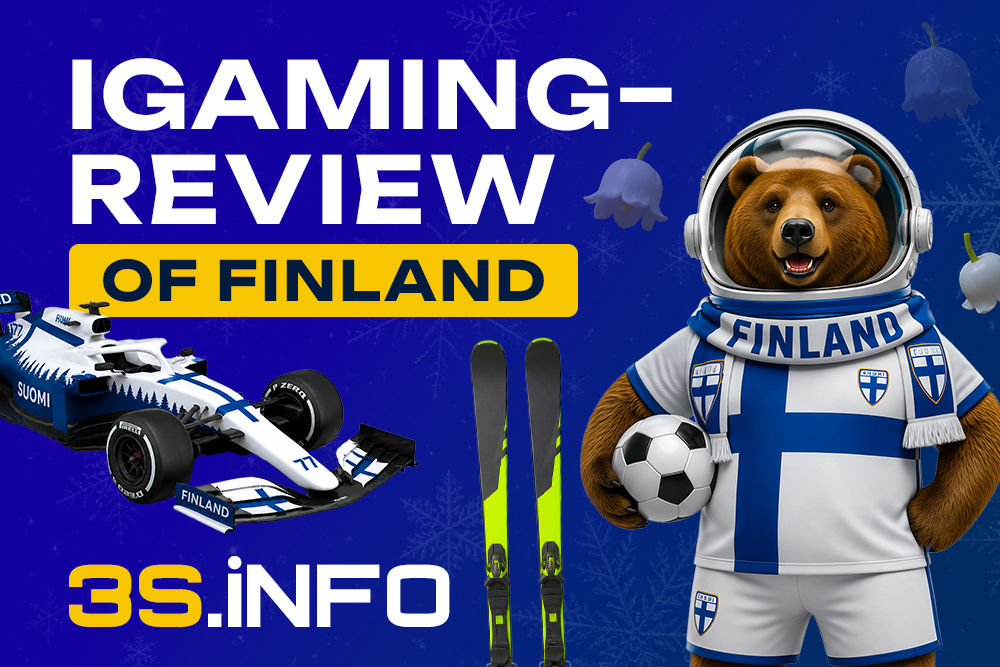
The 3S.INFO overview centers on Finland's shift from the state-run Veikkaus monopoly to a hybrid licensed iGaming market model, set to go live on July 1, 2027. It breaks down which verticals will open to private operators, what a license will cost, and how taxes, payments, KYC, responsible gambling, and the fight against illegal offerings will change.
The core problem for the affiliate industry is that opening the market does not mean opening affiliate marketing: CPA, RevShare, SEO funnels built around promo codes, and influencer integrations are all banned under the new system. So operators and affiliates are left hunting for other entry points, via B2B services, payment solutions, KYC, anti-fraud, compliance, legal media, and technology infrastructure.
iGaming Trends (2026/2027): Why Finland?
For a long time, Finland remained the last major EU market with what amounted to a full online monopoly held by the state operator Veikkaus. But the monopoly could not fully keep digital demand within the country: in 2025, the Finnish digital gambling market was estimated at roughly €1.475 billion in GGR, of which more than €900 million came from products offered by operators other than Veikkaus. Veikkaus's share of the digital segment stood at around 39%.
It was precisely this leakage of demand into the offshore and international segment that became one of the arguments for reform. The state expects not to "create" new demand, but to channel an already existing audience into a controlled market with KYC, limits, taxes, responsible gambling, and local oversight.
For the market, this is a rare situation. Finland simultaneously has:
- A solvent audience with high digital literacy.
- Established demand for online casinos and betting.
- A large share of players already familiar with international products.
- A transition to national licensing with a specific launch date.
- Strong banking and mobile payment infrastructure.
- High smartphone and internet penetration.
- Potential for B2B directions: KYC, AML, anti-fraud, PSP, game aggregation, CRM, and responsible gambling.
However, for affiliates the main takeaway is this: Finland is interesting as a market for operator licenses and B2B infrastructure, not as a standard GEO for classic affiliate SEO, influencer traffic, or RevShare models. The new law permits a range of advertising channels but prohibits affiliate marketing and work with influencers.
Gambling Legislation and Regulation in Finland
Until 2027, the Finnish market operates under the Veikkaus exclusive rights model. The state company controls most gambling products, including lotteries, betting, online casinos, slot machines, and a substantial share of digital gambling.
The new model is enshrined in the Gambling Act 10/2026. The law was approved by the Finnish parliament in December 2025, signed by the president in January 2026, and its key provisions will take effect on July 1, 2027.
Gambling and Betting in Finland: Current Regulatory Status
Veikkaus holds its monopoly on gambling services until June 30, 2027. As of March 1, 2026, companies may submit license applications, but the launch of licensed B2C services is permitted only from July 1, 2027.
Item | Status (2026) | Status (From July 1, 2027) |
| Online casino | Veikkaus monopoly | Opens to licensed competition |
| Online slots | Veikkaus monopoly | Opens to licensed competition |
| Sports betting | Veikkaus monopoly | Opens to licensed competition |
| Online money bingo | Veikkaus monopoly | Opens to licensed competition |
| Lotteries | Veikkaus | Remain under Veikkaus's exclusive right |
| Scratch cards | Veikkaus | Remain under Veikkaus's exclusive right |
| Land-based casinos | Veikkaus | Remain with Veikkaus |
| Land-based slot machines | Veikkaus | Remain with Veikkaus |
| Affiliate marketing | Not a legal route for promoting external operators | Expressly prohibited under the new model |
| Influencer marketing | Restricted under the current monopoly system | Expressly prohibited under the new model |
The reform creates a hybrid system. Finland is not moving to a fully free market: the most mass-market products with traditionally high social reach, namely lotteries, scratch cards, and part of land-based gambling, remain with Veikkaus. Competition emerges specifically in the digital verticals, where the state monopoly was most visibly losing ground to external operators.
Who Oversees the Market?
Until June 30, 2027, supervision and licensing fall under the National Police Board of Finland. Official website: poliisi.fi.
From July 1, 2027, licensing and supervision will pass to a new body, the Finnish Supervisory Authority. It will issue licenses and oversee operators, gaming software suppliers, marketing practices, and compliance with the requirements of the Gambling Act.
Body | Period | Functions |
| Ministry of the Interior | Ongoing | Shapes state policy and drafts rules in the gambling sector |
| National Police Board | Until June 30, 2027 | Oversees the current model, handles licensing during the transition, and enforces payment blocks |
| Finnish Supervisory Authority | From July 1, 2027 | Licensing, supervision, inspections, sanctions, and oversight of advertising and software |
| Veikkaus Oy | Before and after the reform | Retains the monopoly on lotteries, scratch cards, and certain land-based products |
| Banks and PSPs | Ongoing | Enforce payment restrictions against operators on the enforcement list |
How to Obtain a Gambling License in Finland?
A Finnish license is not a permit for "the entire industry." It is tied to a specific operating model: either Veikkaus's exclusive products or competitive online gambling services.
Who issues the license?
As of March 1, 2026, applications are accepted through the National Police Board. From July 1, 2027, the authority will pass to the Finnish Supervisory Authority.
What types of licenses are available?
Permit Type | Purpose | Status |
| Exclusive license | For operations in the segments reserved for Veikkaus | Exclusive regime |
| Gambling license | For online betting, online slots, online casinos, and online money bingo | Competitive market from July 1, 2027 |
| Gambling software license | For suppliers of software used by licensed operators | Applications open from July 1, 2027 |
| International cooperation authorization | For international cooperation by a license holder | Provided for under the new system |
License costs and fees
The transitional application fee in 2026 is €29,000 for both the exclusive license and the gambling license. Once a license enters into force, an annual supervisory fee applies.
Payment | Amount | Comment |
| Gambling license application | €29,000 | The amount is set by decree for 2026 |
| Exclusive license application | €29,000 | For the exclusive model |
| License amendment | Separate fee | The amount depends on the type of amendment |
| Annual supervisory fee | From €4,000 to €434,000 | Depends on annual GGR |
| GGR tax | 22% | For the competitive segment starting in 2027 |
A license is valid for five years.
For an operator, this signals that Finland will not be a "cheap entry point." But the market is appealing thanks to already existing digital demand and the expected migration of players from the unauthorized segment into the national licensed environment.
Key iGaming Operators and Brands in Finland
Until the competitive model launches, Finland's main legal B2C brand is Veikkaus. It is a state-owned company that combines lotteries, betting, slots, online casinos, and part of the land-based offering.
In 2025, Veikkaus generated €936.3 million in actual revenue, with annual profit reaching €447.2 million. The company had around 2.7 million registered customers; roughly 70% of them used Veikkaus through the app or the veikkaus.fi website.
Company / Brand | Status (Before July 1, 2027) | Outlook After Market Opening |
| Veikkaus | State monopolist | Retains the lottery and land-based monopoly, competes in digital |
| Fennica Gaming | Veikkaus's B2B division | Expands Games as a Service and international channels |
| International operators | Cannot legally offer competing B2C digital products without a Finnish model | May operate once a Finnish gambling license is obtained |
| Software suppliers | Operate through the current model and international B2B schemes | Software licensing is provided for from July 1, 2027 |
| Offshore brands | May be familiar to the audience but hold no Finnish B2C license | Cannot target services at Finland without a license |
Which International Casino and Bookmaker Brands Operate in Finland?
As of September 2026, the market is still in a transitional period. It is therefore more accurate to speak not of a ready list of international brands holding a Finnish license, but of potential participants in the future market. Operators may submit applications from March 1, 2026, but they can only begin licensed activity from July 1, 2027.
An international brand cannot automatically be considered legal for Finland simply because it holds a license from the Malta Gaming Authority, the UK Gambling Commission, or another foreign regulator. Working with the Finnish market after the reform launches will require the corresponding national authorization.
Taxation of Gambling and Betting
Finland's post-reform tax model is built around a 22% tax on GGR in the competitive verticals. It will apply to licensed operators working in online betting, online casino, slots, and online money bingo.
Taxes for Operators
Indicator | Value |
| GGR tax for licensed online operators | 22% |
| License application | €29,000 |
| Annual supervisory fee | €4,000 to €434,000 depending on GGR level |
| License term | 5 years |
| Veikkaus local monopoly | Lotteries, scratch cards, and part of the land-based offering |
In 2025, Veikkaus transferred €578.3 million to the Finnish state. That explains why the authorities are eager to keep part of the monopoly intact while also pulling digital GGR from the external market back into the national system.
Taxes for Players
Winnings from Veikkaus and other operators licensed in the EU/EEA are, as a rule, not taxed at the player level. Winnings from operators outside the EU/EEA may be treated as taxable income and are subject to declaration.
Type of Winnings | General Tax Approach |
| Veikkaus | Generally not taxed |
| Finnish licensed operator after 2027 | Exemption expected where conditions are met |
| EU/EEA operator | Generally not taxed |
| Operator outside the EU/EEA | May be subject to declaration and taxation |
| Unlicensed offshore operator | High risk of tax and legal issues for the player |
Tax status depends on the specific operator, the country of licensing, and the nature of the product, so both users and businesses should consult the latest guidance from the Finnish Tax Administration.
Blocking Illegal Sites in Finland
Finland already applies payment restrictions to operators that violate the ban on marketing gambling services in the country. The National Police Board maintains a list of companies against which a prohibition decision has been issued, after which financial institutions restrict outgoing player payments to those operators.
How does the current model work?
Payment blocks remain in place until the end of June 2027. Importantly, they do not apply automatically to all foreign brands, but only to companies for which the National Police Board has issued a corresponding decision over a breach of the marketing ban.
Tool | How It Works |
| Marketing ban | Foreign gambling companies cannot target marketing at Finland |
| Payment blocks | Banks and PSPs restrict outgoing payments to operators on the enforcement list |
| Orders | The supervisory authority may require the cessation of illegal activity or marketing |
| Content removal | The new model strengthens the ability to demand removal of illegal online content |
| Monetary sanctions | Administrative fines and penalty payments are possible |
| Seizure of .fi domains | The new model provides additional powers over local domains |
Enforcement Examples and Limitations
In December 2024, BML Group, affiliated with Betsson, was named the sole company on Finland's updated payment blacklist. The very fact that only one name appeared on the list highlights the limits of the old model: pinpoint payment measures create barriers, but they do not replace comprehensive control over marketing, content, domains, and infrastructure.
From July 1, 2027, the new supervisory authority will gain a broader set of powers: conducting inspections, demanding the removal of illegal content, applying administrative measures, and pursuing penalty payments of up to 4% of turnover, capped at €5 million.
At the same time, Finland is not making DNS or IP blocking a central mechanism at the launch of the new model. The focus remains on licensing, marketing control, payment restrictions, and targeted measures against specific violators.
Outlook for the iGaming Market
The key change has already been adopted: on July 1, 2027, Veikkaus's exclusive right to online betting, online casinos, online slots, and online money bingo comes to an end. This makes Finland one of the most important European markets on the 2027–2028 horizon.
Key Reform Dates
Date | Event |
| December 16, 2025 | Finnish parliament approves the new Gambling Act |
| January 16, 2026 | The law is signed by the president |
| March 1, 2026 | License applications open |
| July 1, 2027 | Launch of the competitive licensed market |
| July 1, 2027 | The Finnish Supervisory Authority assumes licensing and supervisory powers |
| July 1, 2027 | Applications for gambling software licenses open |
| July 1, 2028 | Software suppliers must operate within the new licensing framework |
What Will Change for Affiliate Marketing?
The new system permits a set of controlled advertising channels, including television, radio, print and digital publications, marketing on a licensed operator's own website, non-interactive posts on its social media, and search-engine ads for queries related to the operator.
But the restrictions are fundamental:
- Affiliate marketing is prohibited.
- Influencer marketing is prohibited.
- Direct marketing by phone is prohibited.
- Targeting minors and vulnerable individuals is prohibited.
- Gambling must not be linked to financial success, solving money problems, or everyday normality.
- Advertising must include information on the age restriction and tools for controlling gaming activity.
- In most ad formats, license details and the supervisory authority must be disclosed.
- Bonuses and incentives will be tightly restricted, and personalized bonus mechanics are not permitted.
For the affiliate industry, this is a critical moment. The Finnish market may become a major operator GEO, yet it will not turn into a new market for standard SEO reviews with CPA links, promo-code funnels, blogger integrations, and RevShare projects.
The Finnish iGaming Market: General Overview
Finland is located in Northern Europe, between Sweden, Norway, and Russia, and is part of both the EU and the eurozone. It is a small country by population, yet it boasts a highly developed digital infrastructure and a high level of banking service usage.
According to preliminary data from Statistics Finland, the country's population stood at 5,655,296 in July 2026.
Parameter | Data |
| Region | Northern Europe |
| Capital | Helsinki |
| Population | 5.66 million, July 2026 |
| Largest city | Helsinki: around 694,000 residents |
| Other major cities | Espoo: around 326,000; Tampere: around 263,000 |
| Official languages | Finnish and Swedish |
| Currency | Euro, EUR |
| Used the internet in 2025 | 94% of the population aged 16–89 |
| Smartphone users | 91% of the population aged 16–89 |
| Internet penetration by alternative digital estimate | 98.2%, or 5.52 million internet users |
The gap between 94% and 98.2% comes down to methodology and the age brackets used by each source: Statistics Finland measures the figure among the population aged 16–89, while DataReportal estimates internet users against the total population. For practical purposes, the takeaway is simple: Finland is a mature digital GEO, where a mobile interface, fast payments, and a clear registration flow matter more than a "flashy" landing page.
The history of Finnish gambling has been tied to Veikkaus for decades. The state operator combined lotteries, betting, physical slot machines, and online products, with revenue channeled toward public causes. But the digital segment exposed the monopoly's weak spot: foreign brands managed to capture a significant share of online demand, and that is precisely what accelerated the shift to a licensed model.
Target Audience Characteristics for Gambling
Finns gamble actively, but this is not an audience that can be sustainably retained through aggressive bonuses alone. According to research by the Finnish Institute for Health and Welfare, around 70% of residents of mainland Finland aged 15 to 74 took part in gambling during 2023.
The mass audience is traditionally tied to lotteries and Veikkaus products. However, the most competitive digital segment consists of online casino and sports betting users, some of whom are already familiar with international brands, instant payments, and a broader selection of game mechanics.
Who Gambles?
Segment | Typical Interest | What Matters in the Product |
| Lottery audience | Lotteries, jackpots, simple games | Trust, clarity, regular draws |
| Sports betting | Football, hockey, horse racing, international tournaments | Odds line, live betting, stats, fast mobile UX |
| Online casino | Slots, table games, live casino | Loading speed, convenient cashier, clear limits |
| Young digital audience | Mobile games, esports, instant mechanics | Short sessions, personalized UX, security |
| Mindful users | Spending control and transparency | Limits, game history, quick access to support |
Among the male audience, engagement in betting and intensive gaming formats has traditionally been higher in digital gambling, while lotteries have broader reach. When studying the Finnish market, it is important not to reduce the picture to "young men": in the 2023 player sample, women made up 52.7% and men 47.3%, reflecting the mass appeal of the lottery segment.
What Do They Play?
In the competitive part of the market after 2027, the following will be especially important:
- Online slots.
- Live casino.
- Roulette and blackjack.
- Instant-win games.
- Sports betting.
- Online money bingo.
- Crash and fast game mechanics, provided they comply with Finnish regulatory requirements.
According to Veikkaus, the GGR of the Betting and iCasino division in 2025 amounted to €292.4 million. This shows that sports betting and casino products already form a significant segment even within the old monopoly model.
What Do They Bet On?
Football is the largest sport by betting turnover in Finland, followed by ice hockey and horse racing. Among the local points of interest are the Veikkausliiga, the Finnish Liiga in ice hockey, national teams, European football tournaments, the NHL, and international winter sports competitions.
Sport | Why It Matters for Traffic and Content |
| Football | The largest betting turnover; Veikkausliiga, Champions League, Premier League, national team matches |
| Ice hockey | A national sport; Liiga, World Championships, NHL |
| Horse racing | A traditional vertical with its own culture and infrastructure |
| Basketball | Interest in international competitions and the national team |
| Skiing and biathlon | Strong seasonal interest and local sports identity |
| Tennis | Suited to year-round betting content |
Esports in Finland has a notable young audience, particularly around Counter-Strike 2, League of Legends, Dota 2, and VALORANT. But until the new market launches, the specific set of permitted products and approaches to esports betting must be checked against the license and the operator's rules.
What Resonates With the Audience?
The Finnish audience expects a quality product experience. What matters to them:
- Finnish language and high-quality localization; Swedish is also relevant in part of the country.
- Pricing and settlements in EUR with no hidden fees.
- Fast registration and straightforward KYC.
- A convenient mobile UX.
- Local payment methods.
- Transparent rules on limits, bonuses, and withdrawals.
- Brand reliability and data protection.
- Sports content with genuine analytical value, not promises of easy money.
Payment Solutions and Localization
Finland is a banking-driven and mobile-first market. If a user does not see a familiar payment scenario, a strong landing page conversion will not save the FTD. What matters is a fast checkout, EUR, mobile optimization, straightforward verification, and the absence of unpredictable fees.
Popular Payment Methods
Method | Type | Practical Significance |
| Online banking | Local banking method | One of the most familiar payment scenarios |
| Siirto | Account-to-account / instant transfer | Works through the apps of participating banks, including OP Pohjola and Nordea |
| MobilePay | Mobile wallet | A strong brand in Nordic digital commerce |
| Visa | International cards | Widely used in e-commerce |
| Mastercard | International cards | An important method for online purchases |
| SEPA Instant | Eurozone instant transfers | Suited to account-to-account scenarios |
| PayPal | International e-wallet | Used in some e-commerce scenarios |
| Apple Pay / Google Pay | Mobile wallets | Relevant for mobile checkout where supported by the PSP |
| Cryptocurrency | Alternative method | Not part of the baseline mass payment scenario and requires a separate compliance assessment |
The Role of Banks and Apps
Finnish users are accustomed to confirming actions through their own banking apps. That is why an operator needs not just to add the logo of a local payment method, but to test the entire journey:
- Opening the cashier on mobile.
- Redirecting to the bank app or payment interface.
- Confirming identity and payment.
- Returning to the casino or sportsbook.
- Correctly displaying the balance and deposit status.
For an affiliate, this means analyzing not only CTR and CR on the pre-lander. Check KYC pass rate, payment acceptance, CR2Dep, average time to first deposit, and the share of players who reach their first gaming session.
Restrictions
Finnish payment blocks remain in place until the end of June 2027 and apply to companies that have received a National Police Board decision prohibiting marketing in violation of the Lotteries Act.
Once the new market launches, the payment infrastructure will remain part of the compliance model. It is unwise to build a marketing strategy around attempts to circumvent payment, licensing, or advertising restrictions. For both operators and affiliates, it is more sustainable to work only with authorized products, clear KYC, and vetted PSPs.
Traffic and Marketing for Gambling and Betting in Finland
Finland could become a strong iGaming GEO for licensed operators, but it will not be a classic market for affiliates. The reason is simple: the new Gambling Act opens up B2C competition, but it does not open up affiliate marketing.
This radically changes the familiar performance marketing model. In most newly licensed GEOs, demand first emerges for CPA networks, review sites, promo codes, streamers, and influencers. In Finland, from 2027, operators will be able to use a range of their own and traditional advertising channels, but acquisition through affiliates and influencers is prohibited.
Why the Finnish GEO Is Still Worth Monetizing
The opportunity exists, but it shifts away from FTD commissions toward B2B and legal media formats.
Direction | Potential | Monetization Model |
| KYC and identity verification | High | SaaS, qualified B2B leads, integrations |
| AML and transaction monitoring | High | Enterprise leads, consulting, subscription |
| PSP and open banking | High | B2B referrals, integration contracts |
| Anti-fraud | High | SaaS, risk audits, risk scoring |
| Responsible gambling | High | CRM, limits, self-exclusion, behavioral analytics |
| Game suppliers and aggregation | High from 2027 | B2B partnerships, software licensing |
| Legal/compliance media | Medium–high | Subscription, sponsorship, lead generation |
| Sports media | Medium | Advertising for authorized brands, subscription, sponsorship |
| Classic CPA/RevShare on casino | Low / prohibited route | Not a viable legal model under the new system |
Affiliate marketing as a performance mechanic is prohibited, so standard offers with payment per FTD, CPA, RevShare, or Hybrid should not be built into the financial model for the Finnish B2C market. This also applies to typical promo-code pages, rankings with affiliate links, review portals, influencer integrations, and other funnels where compensation depends on a referred player.
Risks and Opportunities
The main risk for the market is misreading the reform. Many see the formula "end of the monopoly = a new affiliate GEO." For Finland, that is wrong. Competition will play out on the operator side, but distribution will remain tightly restricted.
Risk | How It Manifests | What to Do |
| Ban on affiliate marketing | You cannot build a model around CPA/RevShare and FTD | Pivot to B2B, media, or the operator's own permitted direct channels |
| Ban on influencer marketing | You cannot use bloggers as an acquisition tool | Separate editorial content from commercial promotion |
| High GGR tax | A 22% GGR tax reduces the margin cushion | Calculate P&L separately for casino and sportsbook |
| Strict RG requirements | Limits, self-exclusion, marketing controls | Build RG into the product, CRM, and analytics from the start |
| Veikkaus's strong position | High brand recognition and a local customer base | Focus on UX, product, payments, and trust |
| Potential measures against offshore operators | Payment blocks, removal orders, fines | Do not rely on the unauthorized market |
Over the next three years, the most promising opportunities will not be "new casino reviews," but services that help licensed participants navigate market entry: localization, payments, KYC, software compliance, data analytics, CRM, responsible gambling, and advertising compliance control.
Conferences for iGaming and Affiliate Marketing
Finland itself does not yet have a confirmed calendar of major international conferences on the scale of ICE, iGB Affiliate, or SiGMA that are dedicated specifically to iGaming affiliates in 2026–2028. This stems from the market's transitional status: the biggest reform will only take effect in the summer of 2027.
For teams preparing for Finland, it is more practical to follow Nordic regional events and international exhibitions.
Event | Dates | Location | Why Attend |
| Gaming in the Nordics | Annual format from 2027; 2027–2028 dates are pending confirmation from the organizer | Copenhagen, Denmark | Regulation, the Nordic market, operators, PSPs, B2B |
| Scandinavian & Nordic Gaming Show | Watch for confirmation of the next edition's date | Copenhagen, Denmark | Nordic iGaming, technology, payments, compliance |
| iGB Affiliate | Watch the official calendar for 2027–2028 | Barcelona, Spain | Operators, affiliate managers, SEO, paid traffic, suppliers |
| ICE | Watch the official calendar for 2027–2028 | Barcelona, Spain | Licenses, platforms, games, B2B infrastructure |
| SBC Summit | Watch the official calendar for 2027–2028 | Lisbon, Portugal | Sportsbook, casino, marketing, payments, and technology |
Following the Finnish market is most productive through legal and B2B events, not the familiar round of affiliate networking parties. By 2027, appetite for operator licenses, software suppliers, KYC, PSPs, and product compliance will outweigh the search for the next CPA deal.
Marketing for Gambling and Betting
Starting in 2027, Finland does not shut down marketing entirely, but places it under strict management. Permitted channels include television, radio, print and digital publications, operators' own websites, non-interactive social media, select event formats, and search-engine ads for queries related to the operator.
Channels Available to Licensed Operators
Channel | Status | What to Consider |
| Operator's own website | Permitted | License, RG information, localization |
| Operator's non-interactive social media | Permitted with restrictions | Content must not be turned into interactive consumer engagement |
| TV and radio | Permitted | Age and risk warnings are required |
| Print and digital publications | Permitted | Ad format and content must be compliant |
| Search ads for branded queries | Permitted | Work only with a confirmed license and correct GEO |
| Sponsorship | Available on a limited basis | Sponsoring minors or minor-focused events is prohibited |
| Affiliate marketing | Prohibited | Do not use CPA/RevShare funnels |
| Influencer marketing | Prohibited | Do not use integrations with bloggers or streamers |
| Cold calls | Prohibited | Direct marketing by phone is prohibited |
SEO Approach for Finland
For an ordinary affiliate, the traditional SEO playbook with rankings, promo codes, and affiliate links does not work. However, SEO remains an important tool for licensed operators and B2B companies themselves.
White-hat search clusters that may have practical value:
- "Finnish online casino license 2027"
- "Gambling Act 10/2026: what will change"
- "How to obtain a gambling license in Finland"
- "KYC and age verification for Finnish iGaming"
- "Siirto, MobilePay, and online payments in Finland"
- "Requirements for a gambling software license"
- "Responsible gambling and self-exclusion in Finland"
- "Finland: comparing the Veikkaus model and the new market"
- "Football and hockey betting content for licensed media"
- "Localizing an iGaming product into Finnish and Swedish"
The main SEO hack for Finland is not to look for ways to replace a prohibited affiliate funnel with hidden redirects. The more sustainable path is to create B2B content, expert materials, legal explainers, and product-led pages for companies preparing for licensing.
Practical Cases for Promoting Betting and Gambling in Finland
Case 1: B2B Leads for a KYC Provider
Say you work with a SaaS platform offering age verification, identity verification, and fraud prevention. Finland is opening a new market where operators have to build KYC and player-protection processes from the ground up or adapt them to the new law.
A funnel that works:
- Publish an analytical piece on the Gambling Act 10/2026.
- Build a checklist covering KYC and daily/monthly transfer limits.
- Prepare a white paper, "Finland iGaming Launch: Licensing and Identity Verification."
- Capture emails via a download form.
- Hand the MQL to the sales team.
- Monetize the traffic through a SaaS demo, a consulting engagement, or an enterprise contract.
Here, payout is measured not in FTD, but in the cost of a qualified lead and the potential annual contract value.
Case 2: Payment Intelligence for Nordic Operators
A Finnish operator planning to launch on July 1, 2027 must validate its local payment UX well before acquisition begins. A content project can build a B2B audience through guides on Siirto, online banking, SEPA Instant, MobilePay, refunds, chargeback management, and AML.
Monetization:
- Referrals for PSPs.
- Sales of market intelligence.
- Leads for open banking providers.
- Consulting on checkout localization.
- Webinars for operators and product teams.
Case 3: Sports Media for an Authorized Brand
A licensed operator may use certain permitted channels, including its own platforms, digital publications, and branded search campaigns. A sports media outlet can build content around football, hockey, the Veikkausliiga, Liiga, the NHL, and major international tournaments, provided that any commercial integration complies with advertising rules and does not turn into a prohibited affiliate model.
The focus in such a model is not a promo code or a hidden RevShare link, but sponsorship, a placement contract, a branded special project, or media buying with a fixed commercial logic, as long as it complies with legal requirements and the terms of the licensed advertiser.
Media Buyer's Checklist: "How to Run Traffic to Betting and Gambling in Finland?"
Finland demands not the usual "launch and test" approach, but a preliminary review of the entire model.
Check | What Needs to Be Clarified |
| Market entry date | Licensed B2C operations only start on July 1, 2027 |
| Advertiser status | Whether a Finnish gambling license is in place and which product it covers |
| Vertical type | Betting, online casino, slots, money bingo, lottery, or B2B |
| Monetization model | Whether the model is a prohibited affiliate scheme with performance-based payment per player |
| Traffic source | Whether the traffic source is allowed by law and the license terms |
| Influencers | Whether influencer marketing, which is banned, is being used |
| SEO and links | Whether content is turning into an affiliate funnel with CPA/RevShare mechanics |
| Language and localization | Finnish, Swedish where needed, EUR, and local conditions |
| Payments | Whether online banking, Siirto, MobilePay, cards, and the KYC flow work |
| Responsible gambling | Whether limits, self-exclusion, visible warnings, and support tools are in place |
| Tracking | Whether consent, privacy, and data retention meet the requirements |
| Contracts | Whether compliance responsibilities are clearly allocated between the operator, the media outlet, and the contractor |
| Evidence archive | Whether versions of creatives, licenses, approvals, geotargeting, and verification dates are on file |
iGaming in Finland: What to Expect in 2026/2027?
In 2026–2028, Finland will become one of the key markets of European iGaming, since the last major online monopoly in the EU is coming to an end here. From July 1, 2027, international and local companies will be able to compete under license in online betting, slots, casino, and money bingo, while Veikkaus retains control over lotteries, scratch cards, and part of the land-based segment.
The main insight for operators is to prepare in advance for licensing, the 22% GGR tax, KYC, payments, responsible gambling, and a localized product. For B2B companies, this is a window of opportunity in KYC, AML, anti-fraud, payments, game software, CRM, and compliance.
The main insight for affiliates is more complex. Finland will be a major iGaming market, but not a new field for the usual CPA, RevShare, promo-code SEO pages, and influencer traffic. Affiliate marketing is prohibited under the new model, so the sustainable approach is to work with the market through B2B leads, legal media, payment analytics, technology products, and other formats that are not built on performance-based compensation for a deposit or a player's gaming activity.