Spain has consistently ranked high in terms of interest from iGaming operators and affiliates for several years now, with the year 2025 only cementing this position. The online market reached a historic peak in GGR and continues to grow at double-digit rates annually. For media buyers, this means stable regulation, predictable tax environment, and clear payment infrastructure that allows building long-term funnels for gambling and betting without constant fear of losing access to GEO. Against the backdrop of high internet penetration (around 96% of the population is online) and almost complete smartphone coverage, Spain appears as a mature but still far from fully exploited field for iGaming traffic.
This content serves informational purposes only. We do not endorse violations of local laws or service policies. Please familiarize yourself with local regulations and comply accordingly!
In our new article on 3S.INFO, you'll find a comprehensive guide to the Spanish iGaming market. We delve into legal intricacies, outline effective channels for attracting Spanish audiences, and compile ready-to-use strategies for quick start-up.
Why is Spain a Trending iGaming Market?
Looking at the figures, Spain has already entered the category of mature European markets: just the online segment at the national level generated approximately €1.45 billion in GGR in 2024, with growth of about 17% compared to the previous year. At the same time, the lion's share of revenue comes from online casinos and sports betting, making casino and sports betting verticals key for affiliate marketing funnels.
There are several interesting points for affiliates here. Firstly, there is a clear, well-established regulation that discourages openly grey players but leaves room for strong local and international brands competing aggressively over RevShare and CPA deals. Secondly, there is an extremely high level of digitalization: nearly all adult segments are active online, using social media and mobile banking extensively, which simplifies onboarding into iGaming products, enables fast deposits, and enhances retention through personalized communications.
For media buyers, Spain is also appealing because it’s not a “RAW-exotic” market but one where an established culture of online gaming and betting has already formed: nearly 2 million active online gamers per year, predominantly men aged 18–45, with a clear behavioral pattern towards slots and live bets. This makes hypothesis testing much cheaper in terms of time since the audience predictably responds to typical creatives, offers, and bonus mechanics if they are properly localized under the Spanish mentality and linguistic context.
How are Gambling Activities Regulated in Spain?
In 2025, online gambling remains completely legal and strictly regulated at the national level in Spain by a special law on gambling activities and its subordinate regulations. For a media buyer, this means having a white framework: clear rules of play, a single regulator, transparent licensing, blocking and control systems.
The basis of gambling regulation (primarily online) in Spain is the General Law on Gambling adopted in 2011 and still in force today with amendments. This law introduced a unified approach to regulating online games at the state level and a system of licenses for operators, along with basic requirements for fairness, player protection, AML measures, and responsible gambling practices.
In the 2020s, several important royal decrees were added to the law regarding advertising, responsible gaming, and technical oversight. However, these do not repeal the base law but rather clarify and reinforce it.
The national-level gambling regulator in Spain is the Dirección General de Ordenación del Juego (DGOJ) or the Directorate General for Gambling Regulation. The DGOJ falls within the structure of the Ministry of Social Security and Consumption and oversees regulation, licensing, supervision, and sanctions concerning all nationwide gambling activities, including online casinos, online betting, poker, etc.
The regulator maintains an official register of licensed operators, which can be used as a whitelist of brands for working with legitimate GEOs. It also publishes sanctions, fines and decisions against illegal entities, providing clarity on who operates smoothly in the market and who is already under scrutiny.
iGaming licenses in Spain are issued by the central regulator:
- General licenses across major categories (betting, gambling, contests);
- Singular licenses for specific products (specific types of betting, poker, roulette, slot machines, etc.)
Without such a license, an operator cannot legally serve Spanish players, accept deposits, or launch advertisements. Therefore, from an affiliate perspective, it's safe to work exclusively with brands listed in the official registry.
An up-to-date list of operators holding DGOJ licenses is available in the public registry on the regulator's official website in the section titled "Operadores con licencia."
Supervision of compliance with gambling and betting laws in Spain is carried out by the same national regulator, which:
- collects reports from operators (turnover, GGR, taxes, active players, bonuses);
- conducts inspections (scheduled and unscheduled);
- initiates investigations based on player complaints and signals from other authorities;
- issues decisions on fines, suspension, or revocation of licenses.
Concurrently:
- Tax authorities monitor correct payment of taxes on GGR;
- Financial intelligence units and related bodies oversee AML/CTF aspects;
- Consumer and financial ombudsmen may intervene in disputes involving players.
All these agencies operate together. If an operator systematically violates the rules (advertising, limits, AML, minor protection), the issue quickly escalates beyond a mere fine, putting the brand at risk of losing its license and market access.
What Casino Brands and Bookmakers Operate Legally in Spain?
Only those casino and bookmaker brands operating in Spain with a national DGOJ license and included in the official regulator's registry are considered legal. Operators outside this list are deemed illegal, even if they hold licenses from other jurisdictions (Curaçao, Malta, etc.).
By 2025, Spain had developed a fairly stable pool of legal iGaming brands: the market was neither raw nor monopolized, offering affiliates plenty of options across both casino and betting verticals.
Several dozen license holders officially authorized to accept online bets and launch casino products operate in Spain. The full list of licensed operators is publicly accessible on a dedicated section of the regulator's website, allowing verification of whether a brand holds a valid Spanish license by searching for company names or domain names.
Legal operators in Spain include large international bookmakers and hybrid brands (sports + casino) like Bet365, Bwin, PokerStars, and others that have obtained Spanish licenses and service players under .es domains. Additionally, international casino brands such as 888 and LeoVegas, as well as dozens of local and regionally known operators focused primarily on the Spanish market, are also included in the list of companies licensed by DGOJ.
It's important to note that the open list of legal operators is not static. The regulator regularly updates the registry by adding new licensees and removing those whose licenses have been suspended or revoked.
For a media buyer, this registry serves as the entry point to determine whom it makes sense to partner with legitimately. One operator might own multiple .es domains, each linked to a single license and bearing the corresponding logo for responsible gaming.
| Strengths | Weaknesses |
|---|---|
| Major International Brands | |
| Recognizable brand and trust among players, leading to higher CTR and conversion to registration due to the recognizable logo. | High competition: many advertisers drive traffic to these brands in Spain, so average EPC/CPA metrics may suffer due to saturated audiences. |
| Strong product offerings (multiple sports, markets, live events, extensive slot selection, localized support, app) combined with an efficient retention system, resulting in high LTV for RevShare models. | Strict compliance requirements for creatives and traffic sources, as major international operators closely adhere to local legislation and internal policies. |
| Reliable payments, prompt payouts, and pre-existing localization for Spain: language, deposit/withdrawal methods, local tournaments, and promotions. | |
| Local Companies | |
| Deep understanding of the local player preferences: focus on local sports (football, basketball, tennis), emphasis on La Liga, national cups, local derbies, thematic slots, and promotional campaigns aligned with Spanish festivals. | Product range may be less expansive than global giants: fewer game titles, sometimes inferior UX in mobile apps or websites. |
| More flexible conditions for affiliates: easier access to exclusive CPA deals, hybrid arrangements, and increased RevShare rates for specific quality traffic. | Not all local brands offer equally robust customer support and timely payouts, thus selecting an offer should involve checking reputation and player reviews. |
| Less global noise surrounding the brand, creating opportunities to introduce it to new audiences and achieve good volumes of registrations with higher margins. |
Overall, the situation in Spain looks like this: the market is mature, with a wide choice of operators, but strict filtering applies via licensing and compliance. For operators, this sets a high bar for entry but ensures predictability and protection from overly grey competition later on. For affiliates, there's a variety of offers available, but less room for aggressive grey schemes.
How Much Money Does iGaming Bring to Spain?
In Spain, gambling and betting are subject to taxation for both operators and players, with the taxable base for operators being specifically GGR (Gross Gaming Revenue) rather than the turnover of bets.
[questions_block id="0"]
Taxes for Operators
For licensed online operators, the basic tax is calculated based on GGR, which represents the difference between total wagers placed and winnings paid out. In the nationwide regime, the tax rate for online casinos and sports betting stands at around 20% of GGR. However, for companies registered in the special autonomous cities of Ceuta and Melilla, a reduced rate (approximately 10% of GGR) is applied as a tax incentive to attract business.
In addition to the main tax on GGR, operators pay standard corporate taxes (corporate profit tax) and contributions associated with regulation and licensing. In the offline sector (land-based casinos, halls, bingo venues, betting parlors), part of the taxes and fees are set at the regional level of autonomous communities, meaning the effective tax rate can vary significantly depending on the region.
Taxes and Fees for Players
For players, gambling wins in Spain are classified as taxable income and must be reported in their personal tax return. Only the player's net result for the year (wins minus losses) is subject to taxation, not individual bets or events separately.
The actual tax rate depends on the progressive scale of personal income tax (IRPF). The higher a person's total annual income (salary + other incomes + net gambling results), the higher the marginal tax rate applicable to the gambling portion. Typically, operators do not act as withholding agents for players. Instead, the responsibility for declaring and paying taxes lies with the users themselves. This is particularly relevant for high-rollers.
The online gaming market in Spain shows steady growth. According to data from the DGOJ regulator, industry gross revenue grew by 16.5% year-on-year in Q3 2025, reaching 405.4 million euros.
The online casino sector remains the leader in growth, generating 57% of the entire market. Its revenue amounted to 231 million euros, showing nearly a 23% increase over the past year.
Sports betting, accounting for 37% of the market, grew by 10% over the year. However, within the segment, divergent trends are evident. While traditional pre-match betting declined by 43% quarter-over-quarter, the popularity of live betting (on events broadcast live) increased by 33%.
The overall market growth is driven by new players and increasing activity. The number of new accounts rose by 16.8%, and the volume of deposits increased by 18.2% year-on-year.
How are Illegal Operator Websites Blocked in Spain?
Efforts against illegals in Spain are structured along several lines.
At the regulator level:
- A list of operators working without a license is maintained;
- Decisions on violations are issued;
- Procedures for blocking are initiated.
At the telecom and Internet level:
- Upon request from the regulator and/or a court, ISPs are obligated to block access to illegal gambling platforms (DNS / IP blocking);
- Lists of domains, clones and mirrors are updated and added to the blacklist.
At the payment infrastructure level:
- Banks and payment institutions receive directives not to process transactions for unlicensed operators;
- Merchant account termination is possible if an entity is listed as illegal.
At the law enforcement level:
- Police and other agencies can participate in investigations into major illegal gambling cases;
- Based on court decisions, fines and criminal consequences for organizers are possible.
For the affiliate marketer, the practical conclusion is simple:
- Working with a grey offshore brand targeting Spanish traffic is a high-risk zone for both the operator and traffic sources;
- The regulator actively uses blocks and pressure through payment systems, so even short-term profits come with minimal scheme sustainability;
- For the long term in Spain, it's wiser to build partnerships with licensed brands that pass audits and pay taxes, rather than trying to outrun the regulator with technical workarounds.
iGaming in Spain: Target Audience Characteristics
The Spanish iGaming market has become one of Europe's largest and most regulated, characterized by strong growth in the online segment and near-total digital saturation of the population. The country provides operators with a substantial audience (nearly 48 million inhabitants, high internet and mobile penetration) amidst strict controls on advertising and licensing.
Brief History of Spanish Gambling
- Prior to 2011, online gambling operated essentially in a grey area: general gambling laws and regional autonomy existed, but no specific regulation of the online market was in place.
- In 2011, the General Law on Gambling (Ley 13/2011) was enacted, establishing the DGOJ regulator and a licensing system for online casinos, betting, and poker. Since 2012, licensed operators have been able to commence their work.
- From 2018 to 2021, the government sharply tightened advertising rules, bonuses, and responsible gambling requirements. Starting in 2024, welcome bonuses were partially reintroduced, accelerating market growth.
- In 2024, online iGaming showed a GGR of approximately €1.45 billion (+17.6% compared to 2023) and nearly 2 million active players (+21.7%), reflecting consistent growth in a mature, heavily regulated environment.
About the Country: Basic Facts
Spain is located on the Iberian Peninsula in southwestern Europe.
Population: Approximately 48 million people in 2024 (~0.6% of the world's population and ~10% of EU's population), comparable to Poland and slightly smaller than France or Italy.
Major Cities: Madrid (approximately 3.3–3.4 million residents within city limits), Barcelona (around 1.6 million), Valencia (roughly 800–830 thousand), Seville and Zaragoza (each with 650–700 thousand). These agglomerations form the primary centers of demand for land-based and online gambling.
Official Language: Spanish (Castilian); regional languages (Catalan, Galician, Basque) are recognized in respective autonomies. English proficiency: according to the EF English Proficiency Index 2024, Spain ranks 36th globally and belongs to the category of "intermediate level"; lower than Northern European countries but higher than some Southern European neighbors.
Official currency: euro (EUR).
As of January 2024, Spain had approximately 45.6 million internet users, representing a penetration rate of about 96% of the population, which is one of the highest figures worldwide. Mobile Internet: median mobile connection speed increased by more than 15% in 2023, fixed-line connections by over 20%, supporting smooth operation of online casinos and live betting. The high penetration of the internet and smartphones renders the Spanish iGaming market virtually entirely digital. Players are accustomed to using online services, and mobile format is the key channel for accessing betting and casino platforms.
Target Audience of Online Casinos and Bookmakers in Spain: Characteristics and Habits
Spanish gambling audience consists mainly of males aged 18–45 with medium income levels, who engage in online betting and casino gaming, actively use mobile devices, and respond positively to promotions, live formats, and local sports events.
In the structure of online iGaming in 2024, casino games contributed approximately €625 million in GGR (≈50.5% of the online market), while betting accounted for around €492 million (≈40%).
Who Gambles in Spain?
According to Sigma.world
- In 2024, Spain had around 2 million active online players; 83–83.5% of them were male, and 16.5–17% female.
- Approximately 85–86% of online players fall within the age range of 18–45 years old (core group: young adults and middle-aged individuals).
- Average spending per online player amounts to about €730–740 per year (≈€60 per month); men spend more (about €740–780), women spend €500–540.
- The highest-spending age groups are 36–55 years old, averaging around €1,100–1,160 per year; the most economical group is 18–25 years old (approximately €300–330).
For the Spanish iGaming market, this is an audience with stable income but sensitive to promotions and limits.
- Effective approaches include: live betting and streams (football, basketball, tennis), local content (La Liga, Copa del Rey, European Cup competitions), personalized promotions (free bets, free spins), and loyalty programs.
- In recent years, regulators have severely restricted aggressive advertising (more details further below), making quieter approaches more effective: responsible gambling, brand trust, club sponsorship, and content in media outlets.
What Casino Games Do Spaniards Play?
- The most popular casino segment is slots, followed by roulette (especially live versions) and blackjack.
- According to industry reviews, top-ranking slots on the Spanish market consistently feature titles from major international providers (such as Pragmatic Play, NetEnt, Playtech, etc.), including classic fruit themes, Megaways slots, and branded movie/TV IPs. Specific Top 10 lists depend on the operator, but the general trend favors high-volatility slots and jackpots.
Technically, Spanish players prefer fast-paced, visually rich games with simple rules and the possibility of small yet frequent sessions.
Which Sports Do People Bet On?
- Sport #1 is football: La Liga, Segunda División, Copa del Rey, Champions League, Europa League.
- Key clubs driving the majority of betting volume: Real Madrid, FC Barcelona, Atletico de Madrid, Sevilla, Valencia, Real Sociedad, etc.
- Popular markets: match outcomes, totals, handicaps, goals scored by individual players, combination express bets.
- Other notable sports: basketball (ACB Liga Endesa, EuroLeague; teams Real Madrid, FC Barcelona); tennis (ATP/WTA tour, Roland Garros, Wimbledon, US Open, Australian Open); Formula One and MotoGP (leveraging the popularity of Spanish drivers and the Grand Prix of Spain/Catalonia).
Esports in Spain and Betting on It
- The esports betting market in Spain is currently niche compared to football but growing. Revenues in the esports betting segment are estimated at around $90–100 million in 2025, with expected continued growth (according to Statista).
- Growth is driven by younger players aged 18–35 who actively follow esports leagues and are accustomed to online platforms.
- Main disciplines for betting: League of Legends, Counter-Strike, Valorant, FIFA/EA FC, occasionally Dota 2 and Rocket League.
- Popular forms of betting include live bets on maps/matches, kill/round totals, handicaps, and long-term markets for major tournaments (LEC, World Championships, big CS events).
Esports in Spain serves as a complement to mainstream sports betting, but the segment is rapidly developing and crucial when targeting a young, digitally native audience.
Payment Solutions and Localization Importance in Spain
Functional and familiar payment solutions are critically important for retaining players in Spain. Even loyal users will quickly switch to competitors if they encounter problems with deposits or withdrawals. The Spanish market combines international methods (cards, PayPal, wallets) with strong local solutions (Bizum, domestic processing platforms, SEPA transfers).
Popular Payment Methods for Depositing and Withdrawing Winnings
International Solutions
- Bank Cards: Visa and Mastercard are essential for deposits and withdrawals.
- E-Wallets: PayPal is the most recognizable and one of the most popular wallets in Spain. Apple Pay, Google Pay, Amazon Pay are widely used for e-commerce and iGaming transactions. Skrill and Neteller are present in the market and often utilized by more advanced players.
- International Payment Providers: Stripe, 2Checkout and others support card processing and certain wallets for operators catering to Spanish traffic.
Local Solutions
- Bizum — an app/service for instant bank transfers integrated with most Spanish banks; a key method for fast P2P payments and account replenishment.
- PAYCOMET and Euro 6000 — local payment services/processing platforms focused on the Spanish market, supporting cards, SEPA, and local scenarios.
- SEPA Transfers — a standard for euro payments in the EU, commonly used for bank deposits and withdrawals to an account.
Cryptocurrencies
- Crypto payments interest some players, but their usage in the licensed Spanish segment is limited by strict regulation, KYC/AML requirements, and a focus on transparent, traceable fiat payments.
- Operators focusing on white operations in Spain typically emphasize cards, bank transfers, and e-wallets, either avoiding crypto altogether or using it outside local licensing frameworks.
Limitations and Recommendations for Operators and Affiliates
Restrictions
- Strict Regulations: Licensed operators must comply with KYC/AML, verify the source of funds and block anonymous or suspicious transactions.
- No Hidden Fees Allowed: Hidden commissions for withdrawals or conversions trigger complaints and regulatory attention.
- Advertising and Bonus Restrictions: Promoting "instant payouts" or bonuses that aren't actually supported by payment infrastructure is prohibited.
Practical Tips
- Essential Payment Combination: Ensure you offer bank cards + PayPal (minimum trusted setup); add Bizum and/or a local processor (PAYCOMET, Euro 6000) to boost conversion specifically for Spanish audiences.
- Focus on Speed and Transparency: Clearly specify withdrawal times (e.g., "up to 24 hours" for e-wallets/Bizum, longer for bank transfers); display any fees during the deposit/withdrawal process.
- Optimize Mobile User Experience: Deposit and withdrawal interfaces should be optimized for smartphones, with support for Apple Pay/Google Pay and minimal manual input required.
- Emphasize Trust Factors: Affiliates should highlight popular local payment methods (Bizum, PayPal, cards), fast payouts, licensed status, and reliability (not just bonus size) as critical trust triggers for Spanish players.
To successfully localize in Spain, it's essential to treat payment solutions as integral parts of your product and marketing strategy. Offering familiar payment methods and transparent withdrawal rules often matters more than another welcoming bonus.
iGaming in Spain: Traffic and Marketing
Spain is considered a "premium" Tier 1 market with high click costs, but also with a high average player spend and stable regulation. Therefore, with skilled management of offers, traffic from this region yields high margins over the long term. For affiliates, it is one of the few major EU markets where iGaming is already mature yet still growing.
- Spain's online gambling market demonstrates steady double-digit growth in GGR and the number of active players, featuring both international brands and strong local operators.
- Competition is fierce, signaling a healthy market. Budgets exist for marketing, sponsorships, and affiliate programs. New and challenger brands enter niche segments (mobile-first casinos, local sports, live casinos, etc.).
- For affiliates, the advantage lies in clearly defined regulations. Long-term projects (review portals, media buying teams, content sites) can be built without fear of sudden blanket market prohibition.
Why is Traffic from Spain Highly Monetizable?
- High ARPU: Average annual spending by active players on online gambling ranges in hundreds of euros, even higher for older demographics (30+). This allows operators to offer generous CPA and RevShare deals.
- Affluent Audience: Spain is a developed EU market with easy access to credit/debit cards, PayPal, and banking apps. Practically no barriers to deposits exist.
- Nearly universal Internet and smartphone penetration ensure that even broad traffic sources (SEO, content, social networks) convert effectively into registrations and deposits.
Niches for Affiliate Marketing in Spain
- Content Projects in Spanish (reviews of licensed casinos/betting companies, rankings by payment methods, responsible gambling);
- Sport-Focused Content (football, basketball, tennis) integrating partnerships with bookmakers;
- Mobile Traffic (PWA casinos, apps emphasizing quick deposits via cards and wallets);
- SEO Portals: Brand reviews, bonuses, payment methods, real ratings, guides on betting on La Liga and European championships;
- Social Media & Content: TikTok/YouTube/Instagram* with line analysis, predictions, educational content, carefully adhering to advertising restrictions;
- Themed Projects: Football, basketball, tennis, esports websites embedded with affiliate links.
Important: Due to strict iGaming advertising regulations in Spain, efforts shift toward native and content-driven marketing rather than pure banner purchases.
CPA, RevShare, Exclusives
- CPA models in Spain generally yield higher returns than in Tier 2/3 regions, as operators benefit from paying more for players with high LTV.
- RevShare is especially appealing in mature, licensed EU markets. Players remain active longer, make regular deposits, and a stable RevShare generates greater cumulative profits than a one-time CPA.
- Hybrid Model: A common scheme balancing risks — a fixed CPA plus a percentage of the player's net revenue — is frequently offered by operators and networks in Spain.
- Exclusive Offers: Higher CPA or RevShare for a limited period tied to a specific traffic source; unique promo codes/bonuses for your audience; whitelisting (permission for formats unavailable to mass affiliate pools).
- Securing these requires demonstrating high-quality test traffic: operators in Spain carefully assess retention, deposits, and chargeback risk.
Thus, earning well from Spanish traffic is possible if you view this GEO as a mature, premium, and appreciative market. High-quality localized content, proper model selection (RevShare/hydrid), and adherence to regulatory rules transform intense competition into sustainable passive income.
Gambling Advertising Restrictions in Spain
Spain imposes some of the strictest gambling advertising restrictions in Europe, remaining highly regulated even after slight relaxations in 2024. When planning any activity aimed at the Spanish market, it is essential to recognize that gambling ads are permitted only within the strict guidelines of responsible gaming and under the supervision of licensed operators.
The key document setting the rules is Royal Decree 958/2020 on gambling advertising, which came into effect in 2020.
Online and social media gambling advertisements are allowed only for licensed operators and in strictly targeted formats, with mandatory warnings about risks and age restrictions. Advertisements must contain notifications stating that the product is intended solely for adult users and must not target youth, students, or vulnerable groups.
A separate set of restrictions concerns bonuses, free spins, free bets, and other promotional mechanisms. Welcome bonuses and aggressive promotional actions to attract new players have been substantially curtailed and regulated to prevent pressure and misleading offers. It is forbidden to promise "guaranteed winnings," emphasize that playing is a reliable way to earn money, or conceal wagering conditions and limitations on promos.
Any advertisement exceeding these boundaries could lead to fines, blocks, and licensing issues for the operator.
What Does This Mean for Media Buyers and Operators?
- For operators, the practical conclusion is straightforward: any public advertising activity must be conducted in conjunction with a license, within local legal frameworks, and with legal review of creative materials. Any attempt to exceed boundaries through overly aggressive bonuses, controversial sport integrations, or youth-oriented visuals may lead to claims from the regulator and damage relationships with the local market.
- For affiliates, it is important to understand that Spain is a GEO where the focus shifts away from loud mass marketing towards content, expertise, and softer, educational formats: reviews, guides, analytics, comparisons of licensed operators, and emphasis on safe play.
Working Marketing Channels for Gambling and Betting in Spain
Social Networks
Meta* (Facebook*, Instagram*) and TikTok: cautiously through native content, expert insights, forecasts, humor, rather than direct "play in casino" calls due to strict regulations. X/Twitter: for live commentary on La Liga, UEFA Champions League, EuroLeague matches with subtle integration of affiliate networks.
Streaming and Video Platforms
Twitch, YouTube: Live betting streams, line breakdowns, La Liga and European cup analyses, demonstration of slot machine and live casino games (in white format: focus on responsible gaming).
Influencers
Local bloggers covering football, betting, and esports. Effective formats include podcast integrations, short videos/reels, and match reviews.
Content and SEO
Portals reviewing licensed operators, guides on betting in top leagues, payment and bonus reviews are among the most resilient attraction channels in the Spanish market.
Primary Traffic Sources
SEO optimization for Spanish-language queries ("casinos online España," "mejores casas de apuestas La Liga," "casino con Bizum," "apuestas deportivas PayPal").
Contextual and teaser ad networks, where permissible (often through "white hat" creatives: sports, analytics, entertainment).
Push/pop traffic and in-app advertising: secondary channels requiring rigorous quality filtering.
Practical Recommendations
Always rely on licensed operators: promoting non-licensed brands in Spain leads directly to blocks and penalties.
Emphasize fast payouts, popular payment methods (Bizum, cards, PayPal) and local sports (football, basketball), rather than "easy money."
Test different landing pages: "sport-focused" (betting), "casino-themed" (slots + live casino), "universal" (combo products).
SEO Hacks for Casinos and Bookmakers
Strict Localization for Spain
Pure Spanish language (not Latin American), local terminology: "apuestas deportivas," "casinos online España," "tragaperras," "casas de apuestas legales," etc.
Dedicated pages for key search queries: bonuses, payment methods, specific tournaments (La Liga, Champions League).
Expert Content + E‑E‑A‑T
Reviews with genuine pros and cons, guides on betting and slots, sections on responsible gambling, legal explanations regarding licenses and taxes. All of this builds trust and improves search rankings.
News Traffic and Evergreen Topics
News articles about changes in legislation, bonuses, major matches, alongside evergreen content ("how to bet on Asian handicaps," "guides to roulette/blackjack").
Technical Aspects
Fast mobile site (Core Web Vitals), adaptation for AMP/PWA, schema markup (FAQ, Reviews, Articles).
Internal linking: reviews → ratings → specific offers, guiding players through the sales funnel.
Practical Cases: How to Make Money on Spanish Traffic
Examples of Typical Working Models (Generalized Industry Cases for Spain):
SEO Portal + RevShare/Hybrid
- Create a content project with reviews of licensed casinos/bookmakers, ratings, and guides.
- Sources: SEO + occasional social media content.
- Model: Hybrid (CPA + RevShare) → slow but steady traffic with high LTV and passive income.
Football + Betting Theme
- Website/channel focused on La Liga: match calendar, predictions, statistics, coefficient analysis.
- Affiliate Programs: Large licensed bookmakers.
- Model: CPA/Hybrid, emphasis on peak events (El Clásico, cup finals, European cups).
Media Buying in Social Media / UAC Formats
- Traffic sourced from TikTok/Meta/Google using light creatives: humor, highlights of matches, quiz landing pages.
- Followed by warming up on pre-landing pages/bots and converting into registration/deposit.
Checklist for Launching Traffic in Spain
1. Before Starting
Verify which brands possess an official Spanish license / what models (CPA/RevShare/Hybrid) are available for this GEO.
Clarify advertising restrictions: what's acceptable/unacceptable in creatives (bonuses, "easy money," age restrictions, references to responsible gambling).
2. Source Preparation
Select 1–2 primary channels (for example, SEO + TikTok or SEO + Google Ads in white formats).
Prepare landing pages and pre-lands: in Spanish, with clear local terminology / highlighting safety, licenses, popular payment methods and fast payouts.
3. Launch and Optimization
- Test several offers (casinos/bookmakers) with different payment models.
- Monitor CR to registration, FTD, retention, holds, and refunds.
- Remove poorly converting offers and low-quality sources (high chargebacks, complaints, weak retention).
4. Safety and Scaling
- Adhere to age targeting (18+) and avoid grey-area tactics, which are swiftly cut off by Spanish regulators.
- Scale only combinations that demonstrate stable ROI and don't cause compliance issues for affiliates.
Success in Spain comes to those who operate above board: localized content, working exclusively with licensed brands, careful creatives, and a focus on long-term RevShare/hydraulic models rather than one-off CPA dumpings.
What types of gambling are permitted in Spain?
What gambling is allowed in Spain?
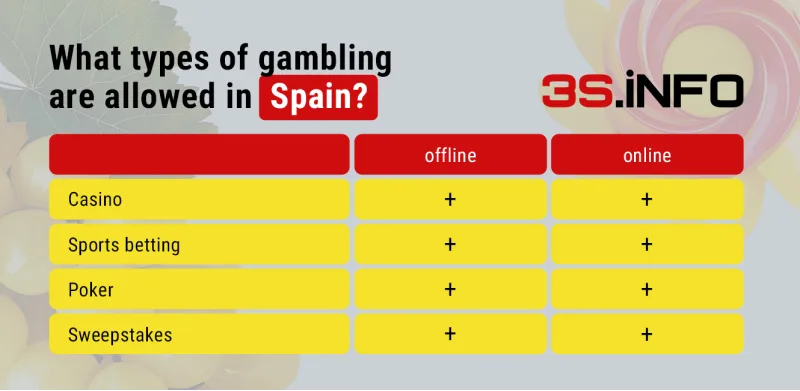
The regulatory body for gambling in Spain is the Dirección General de Ordenación del Juego (DGOJ), which is under the jurisdiction of the Spanish Ministry of Finance. To organize betting or gambling in Spain, one of the following licenses must be obtained:
- A general license for all types of authorized gambling is issued for 10 years and can be renewed for another 10 years.
- A special license allows an operator with a general license to offer certain games (poker, roulette, baccarat, slots for gambling and fixed odds betting, horse racing for betting). The validity period for this license is from one to five years. It is important to note that the loss of a general license automatically results in the loss of the associated individual licenses.
- The legislation specifies that licenses issued by other states will not be valid in Spain.
The minimum share capital required for a company with a general license ranges from €60,000 to €100,000, depending on the type of license.
The list of legal operators of casinos and betting shops in Spain can be found in a designated section on the website. According to data from February 2025, there are currently 78 operators holding gambling licenses in Spain. Some of the well-known global brands on the market include 888, BetWay, Betfair, LeoVegas, and Marathonbet.
In the same section, there is a filter that allows you to check the address of the site and verify the presence of the operator's license.
All online casinos and bookmakers legally operating in Spain are required to host their sites in the .es domain. In addition, they are obligated to display a special DGOJ Safe Gambling logo. The list of authorized sites of casinos and bookmakers in Spain can be found in a dedicated section (one operator may own several sites).
According to the results of 2024 (Research Blask) in the gambling market in Spain, there are 105 gaming brands. Bet365 is the leader among them with gross revenue of 378 million dollars, followed by Codere and Sportium, which earned 100 million dollars.
Penalties for illegal gambling and betting in Spain
The fine for gambling services without a license is 50 million euros.
Advertising, sponsorship, or promotion of illegal gambling in any form can result in a fine of up to 1 million euros.
By the end of 2024, Spain had the highest operator fines worldwide, a ranking that also included Australia, the Netherlands, Sweden, the USA, the UK, Finland, Italy, and Canada. According to Gambling Industry News, the regulator imposed fines totaling $184.4 million, primarily due to operating without local licenses.
How are illegal gambling and betting sites blocked in Spain?
There are other precautions that can be taken to prosecute illegal gambling, such as blocking access to illegal sites and payment methods.
The DGOJ is authorized to prosecute illegal gambling services offered in Spain.
How much money is made from gambling in Spain?
According to the official website of the Spanish regulator, DGOJ, the gross gaming revenue (GGR) from online betting and gambling in Spain amounted to 348.1 million euros in the third quarter of 2024, marking an increase of 14.41% compared to the figures for the third quarter of 2023. Online casinos accounted for approximately 54% (€187.99 million), sports betting 39% (€135.92 million), poker 6% (€20.52 million), and bingo 1% (€3.67 million).
According to Data AI data for 2023, Spain, with a figure of $475 million, was among the top 20 countries with the highest player spending on mobile gambling apps.
Blask's research shows that by the end of 2024, Spain will be among the top 6 countries in the world with the highest revenues from iGaming. Experts estimate that eGGR (Estimated Gross Gaming Revenue) will reach 1.5 billion dollars, and eFTD (Estimated First Time Depositors) will amount to 4.1 million dollars.
The gambling market's primary advantage, despite the limited competition among operators, is its solvent audience.
(Read further about the target audience of gambling in Spain).
How much gambling taxes are paid in Spain?
Monthly online casinos and bookmakers that have obtained a Spanish license are subject to a 20% tax on GGR.
For players, taxation is calculated based on income and winnings.
- For income exceeding €22,000, winnings exceeding €300 must be reported in the tax return.
- At winnings from 60 thousand euros per year it is necessary to pay 45% tax, from 35200 euros - 37%, from 20200 euros - 30%, from 12450 euros - 24%, up to 12 450 euros - 19%.
How to advertise betting and gambling in Spain?
Article 37 of the Royal Decree on Advertising (October 2020) establishes regulations concerning the promotion of gambling. From 2021 to 2024, the country implemented stringent regulations regarding the promotion of casinos and bookmakers. However, in the spring of 2024, following a complaint lodged by the Association of Digital Games (Jdigital) to the court, several restrictions were lifted.
The updated regulations now permit the promotion of online gambling and betting activities in Spain. the following changes have been made, which allow to
- Target advertising on bookmaker and casino websites to new customers. Previously, there was a ban for accounts registered less than 30 days ago.
- Place gambling advertisements on social networks and video hosting sites (YouTube, TikTok, Twitch, Kick, Dailymotion). The main condition is that the advertisement must be aimed at the audience over 18 years of age.
- Use images of celebrities in advertising (the list of famous Spanish athletes to promote betting can be found further on).
- Use in advertising the attributes of economic success and prosperity: money, luxury goods, jewelry, cars, luxury homes.
How are residents of Spain attracted to casino and bookmaker sites?
The Kingdom of Spain is a country in the southwest of Europe.
As of 2024, there are 47.9 million people living in Spain. The average age is 45 years old. The average life expectancy is 83 years.
The largest autonomous regions are Catalonia, Madrid (which is not only a city but also a region), Andalusia and Valencia. The largest cities are the capital Madrid (more than 3 million inhabitants), Barcelona (1.6 million inhabitants), Valencia (about 800 thousand inhabitants), Seville (700 million inhabitants).
The official currency is the Euro.
The main official language is Spanish. Catalan, Galician and Basque are also official in their regions.
The average monthly wage is around 1750 euros.
The predominant religion is Catholicism, although there is a growing diversity of other faiths, including Islam and Protestantism.
Approximately 94% of the population has free access to the Internet.
Spaniards are big gamblers. According to the regulator (Q3 2024 report)
- The amount of deposits in 3 months amounted to 1.14 billion euros and showed a year-on-year growth of 23.87%.
- Every month, online casinos and betting sites registered about 153 thousand new accounts (only profiles with at least one deposit are taken into account). At the same time, the growth is 42% compared to the same period in 2023.
- In total, the average number of active users of sites with gambling in Spain is about 1 million people.
According to the Blask study, at the end of 2024, the average income of 30% of players will be between 21 and 32 thousand dollars a month, which corresponds to the high purchasing power of the audience.
According to a study published in February 2025 by the Parliamentary Socialist Group (SPG), 21.5% of students aged 14 to 18 years old gambled for money online or in person. Consequently, on January 27, 2025, Spain's Joint Commission for the Study of Addiction approved amendments to tighten identity verification rules.
Spain now requires online gambling operators to conduct identity verification in accordance with know-your-customer (KYC) and anti-money laundering (AML) regulations.
What casino games do residents of Spain choose?
The most popular online casino games among Spaniards are
- Slots;
- Live Roulette;
- Poker;
- Cash Games;
- Classic Roulette;
- Blackjack.
This conclusion can be drawn from the GGR analysis for the third quarter of 2024, published on the website of the regulator. At the same time, it is interesting to note that classic roulette, poker and cash games showed a negative trend compared to the same period in 2023.
Which sports are popular in Spain?
According to the DGOJ, at the end of 2024, sports betting will have received the most money from live and pre-match betting, with 51.9 million euros.
- Football is by far the most popular sport in Spain, and La Liga is one of the top leagues in the world. Real Madrid and Barcelona are football clubs that have fans all over the world. The Spanish national team, La Roja, has won the 2010 FIFA World Cup and the UEFA European Championship in 1964, 2008, 2012 and 2024. The football culture is deep-rooted and major matches are national events.
- Basketball is the second most popular sport in Spain, and the ACB (Spain's top basketball league) is considered one of the best in Europe. The Spanish national basketball team is very successful and regularly competes at the highest international level. They have won several European Championships and the World Basketball Championships in 2006 and 2019. Famous players: Stars such as Po Gasol, Marc Gasol and Ricky Rubio have boosted the sport's popularity, and several Spanish players have also made a name for themselves in the NBA.
- Tennis is widely played in Spain due to the strong tradition of the sport and the success of Spanish players in international tournaments. Famous players: Rafael Nadal is one of the most popular sports figures in Spain and has won numerous Grand Slam titles. Other players such as Carlos Alcaraz and Garbiñe Muguruza have a large and loyal following. Spain hosts several international tennis events such as the Madrid Open. According to Entain for 2025, tennis in Spain will be one of the most important niches for sports betting.
- Motorsports (Formula 1 and MotoGP). Fernando Alonso, a two-time Formula One World Champion, has made the race popular in Spain. The Spanish Grand Prix is an annual event held at the Circuit de Barcelona-Catalunya and attracts many local fans.
- Handball is very popular in Spain at both professional and amateur levels. The Spanish ASOBAL league is the top handball league in Europe. National success: The Spanish national team won the World Handball Championship.
- Cycling is popular in Spain, largely due to the country's varied landscapes, which provide excellent terrain for both professional and recreational cycling. Spain hosts the Vuelta a España, one of the three Grand Tours of cycling, along with the Tour de France and the Giro d'Italia. The event attracts international attention and considerable local support.
- Despite the controversy, bullfighting is deeply rooted in Spanish culture, especially in regions such as Andalusia and Madrid. Although less popular with the younger generation and banned in some regions such as Catalonia, bullfighting remains a traditional and symbolic event in many regions.
What payment facilities are available in Spain?
Local payment systems include PAYCOMET and Euro 6000.
The world's most popular payment systems are available in Spain for depositing and withdrawing winnings:
- Visa and Mastercard systems.
- The most popular e-wallet in Spain is PayPal. Other popular wallets include Apple Pay, Google Pay and Amazon Pay. Skrill and Neteller are also available to users in Spain.
- International payment services that cater to the Spanish population include Stripe and 2Checkout.
- Many Spaniards use apps that allow them to pay by bank transfer. The Bizum application, for example, works with all Spanish banks.
- The SEPA (Single Euro Payments Area) system is actively used.
Movistar is the largest mobile phone operator in Spain. Spaniards also use the services of Orange, Vodafone, Yoigo, Pepephone, MásMóvil and Digi.
Cryptocurrency in Spain is regulated by law: citizens can buy, store, sell and use it as a means of payment. The main condition is to comply with the rules and pay taxes.
Which betting and gambling creatives are used in Spain?
- To attract Spanish users to online casinos and betting sites, it is important to combine customized marketing strategies with an understanding of cultural and regulatory content. What's worth considering?
- Localized content and language: Ensure that the website, promotions and customer service are available in Spanish. Using regional dialects, such as Catalan in Catalonia, can also increase local appeal. Content should reflect local interests, including sports popular in Spain such as football (especially La Liga), basketball and Formula 1.
- Cultural promotions and events: Create exclusive promotions in honor of Spanish holidays or sporting events. For example, special offers dedicated to La Liga, the Spanish Grand Prix or important football matches.
- Mobile optimization and applications: Take into account the high use of mobile devices in Spain. It is essential that the site is optimized for mobile devices and has an easy-to-navigate interface.
- Transparent payment methods and responsible gaming: Make sure that popular Spanish payment methods such as Bizum, PayPal or credit/debit cards are available. This will build trust among users.
- Spain is famous for its lively festivals like La Tomatina (the last Wednesday in August), San Fermin (July 6-14). These events symbolize the Spanish love of vibrant celebrations. Advertising campaigns can convey this energy by incorporating colorful visuals and festive themes that are so close to the Spanish people. Christmas and New Year's Eve are ideal times for promotions as Spaniards are in high spirits and have more free time for leisure activities such as betting and online gaming. Special attention should be paid to Semana Santa (Holy Week) and other religious holidays. During these times it is best to avoid openly advertised gambling.
- Spaniards are often more motivated by experiences (such as travel vouchers or tickets to sporting events) than by material goods. Raffles that offer VIP tickets to Real Madrid or Barça matches will be very attractive to bettors. Similarly, Spaniards may be interested in rewards with local culinary references (gourmet dinners or baskets), as this nation is very proud of its regional culinary and wine traditions.
Which traffic sources are popular in Spain?
According to the StatCounter website for the last year (January 2024 to January 2025), the following are popular in Spain
- Social networks: Facebook* (87.91%), Instagram* (6.08%), Pinterest (2.71%), Twitter (1.79%), YouTube (0.92%), Reddit (0.26%).
- Search engines: Google (95.3%), Bing (3.37%), Yahoo! (0.9%), DuckDuckGo (0.36%), Ecosia (0.13%), Yandex (0.11%).
- Mobile takes 58.95% of the market, desktop - 39.14%.
- The most popular models of mobile devices are Xiaomi (28.25%), Samsung (27.73%), Apple (22.89%), Oppo (6.32%), Huawei (2.53%).
- Most popular mobile browsers are Chrome (73.89%), Safari (20.01%), Samsung Internet (4.48%), Opera (0.53%), Firefox (0.52%). The most popular desktop browsers are Chrome (72.63%), Safari (6.93%), Firefox (6.11%), Opera (4.5%).
(Facebook and Instagram are blocked in Russia by court order).
In Spain, all the conditions are created to successfully pour on betting and gambling. The main advantages: clear and detailed legislation, loyal gambling advertising rules, active and wealthy audience. 3SNET offers the best offers from casinos and bookmakers in Spain who are waiting for quality traffic and are willing to pay for it.
[questions_block id="1"]