Last Updated: 26 february 2026
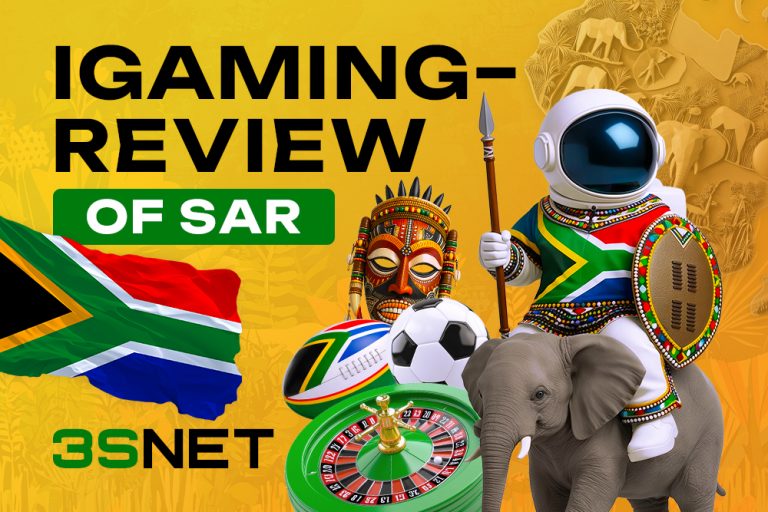
South Africa is currently one of the most attractive and stable iGaming markets in Africa. It offers established purchasing power, clear regulations, strong local brands, and an audience already comfortable with online betting. For media buyers, this isn’t a speculative “wild GEO”; it’s a market for strategic funnel planning, solid unit economics, and sustainable scaling.
This content serves informational purposes only. We do not endorse violations of local laws or service policies. Please familiarize yourself with local regulations and comply accordingly!
A 3S.INFO review explains why South Africa is the gateway to the continent. With mature regulations, clear tax rules, and established marketing channels, affiliate traffic here is both scalable and predictable. For affiliates, it’s a chance to move past “quick media buying” and build long-term brand partnerships with brands, secure stable payouts, as well as develop a sustainable business around sports and hybrid products. For the entire iGaming industry, South Africa is a testament to how the African market is maturing: transitioning from land-based casinos and lotteries to serious online betting, where KPIs like eFTD, eGGR, and retention are now being discussed at the level of top-tier European conferences.
South Africa: The Rising Star of iGaming
First, under South African law, online sports betting is legal if the operator holds a license from one of the provincial gambling boards (such as Gauteng, Western Cape, etc.). However, online casinos offering slots, roulette, or blackjack are still not licensable within the country. As a result, classic casino brands accepting players from South Africa typically operate from offshore jurisdictions (like Curaçao, Malta, etc.). For local players, this remains more of a gray area than a clear-cut permission. From a media buying perspective, it makes strategic sense to focus on sports (especially football, cricket, and rugby) and the hybrid products offered by major betting brands that include a game section. Pure casino verticals, on the other hand, should be approached with much more caution.
Second, the market is growing at a very strong pace. According to industry reports, South Africa’s total gross gaming revenue (GGR) reached approximately ZAR 59.3 billion, with year-on-year growth of nearly 26%. Meanwhile, the iGaming activity index (Blask Index) grew by 15.6% in the first half of 2024, reflecting a surge in engagement and interest in online gaming. Key metrics among leading brands (eFTD, eGGR, and market share) are also on the rise. New players are registering in significant numbers, deposit volumes are increasing, and operators are ramping up their budgets for performance marketing and affiliate channels. For affiliates, this is a clear signal: the GEO is alive and well. LTV is increasing, competition is fierce, but operators are ready to pay a premium for quality traffic.
Third, South Africa is one of the most established markets in Africa in terms of regulation and digital infrastructure. The regulatory framework is detailed and well-defined, with provincial gambling boards operating effectively. Operators hold white licenses, benefit from a transparent tax model, and operate within a clear legal enforcement environment. This significantly reduces the risk of an operator suddenly “vanishing” along with your statistics and commissions. As various reviews of African affiliate programs point out, South Africa is widely regarded as one of the most reliable markets on the continent when it comes to payouts, tracking, and partner support.
Add to this a high level of digital penetration. According to analyst estimates, the broader South African gaming market (beyond just gambling) has already surpassed USD 1 billion and is projected to continue growing at over 8% annually, with the online segment’s share increasing year by year. The audience is accustomed to online payments, bank cards and e-wallets. People have good smartphones, stable mobile internet, and high engagement on social media — all of which directly boosts the conversion rates of your campaigns. This is a market where you can effectively run CPI/CPA models, calculate eCPC accurately, and set reasonable KPI caps, rather than fighting for every single approval in a high-risk “wild west” environment.
For affiliates, South Africa offers several key advantages. First, high purchasing power: the average check and LTV are noticeably higher than in most other African GEOs. This allows you to move beyond “cheap junk traffic” and build proper funnels using content, audience warm-up, and retention mechanics. Second, a mature marketing stack: local operators use advanced tracking systems, understand post-click optimization, postbacks, and complex payout models, and actively invest in affiliate management. This means you’re not left “calculating analytics in a notebook” alone. You plug into an ecosystem where the operator already has a CRM, anti-fraud systems, solid analytics, and clear dashboards.
According to industry reviews from the National Gambling Act, ICLG, iGamingToday market research, the Blask x NEXT.io / ICLG South Africa chapter / IMARC Group South Africa Gaming Market.
Gambling Regulation in South Africa: Laws, Licenses, Blockings
South Africa has a strict but transparent gambling regulatory framework: a unified national act, combined with a network of provincial authorities that handle licensing, control, and enforcement.
The primary legal framework for gambling in South Africa is the National Gambling Act 2004 (Act No. 7 of 2004), which came into effect on 1 November 2004 and was subsequently amended by the National Gambling Amendment Act 2008 (Act No. 10 of 2008). This Act coordinates the powers of the national level and the provinces concerning casinos, parimutuel betting, betting, bingo, and gambling devices. It establishes the fundamental principles for player protection, sets requirements for advertising, and defines liability for unlawful gambling.
Online betting is regulated within this general framework: under national law, the licensing and operational control of B2C operators is delegated to the provinces, while the national level coordinates policy and ensures that regions remain within the bounds of the overarching rules. However, remote interactive (online) casinos remain outside the full legal framework, whereas online sports betting and parimutuel betting are permitted provided the operator holds a provincial license.
Regulatory Authorities and Their Responsibilities
B2C licenses for casinos, parimutuel betting, bookmaking activities, bingo, and gaming machines are issued by the provincial gambling boards, not by the national council. The national level (the National Gambling Board or NGB) and the provinces share responsibility for enforcement. They identify illegal operators, refer cases to law enforcement authorities, and can initiate blockings, as well as suppress illegal advertising and offline activities.
At the national level, the National Gambling Board (NGB) operates. This body does not issue B2C licenses, but rather:
- Oversees how the provinces apply the law and regulate gambling;
- Maintains registers, collects and analyzes market data;
- Coordinates standards for responsible gambling, technical requirements, and AML (Anti-Money Laundering) approaches;
- Advises the Department of Trade, Industry and Competition (DTIC) on gambling policy matters.
The actual licensing and day-to-day oversight are handled by the provincial gambling boards. The key ones include:
- Western Cape Gambling and Racing Board (WCGRB);
- Gauteng Gambling Board (GGB);
- Mpumalanga Economic Regulator (MER);
- Eastern Cape Gambling Board (ECGB);
- Northern Cape Gambling Board (NCGB);
North West Gambling Board (NWGB).
Types of Licenses (Verticals and Activities)
At the provincial level, separate licenses typically exist for:
- Casino operators (casinos);
- Bookmakers / sweepstakes (including online sports betting);
- Bingo operators;
- Limited Payout Machines (LPMs);
- Manufacturers, suppliers, and distributors (B2B providers of games and equipment);
- Interactive / online betting licenses: for operators accepting wagers via the internet.
Who Blocks Illegal Operators in South Africa?
In South Africa, there is no widespread model of “centralized DNS blocking” as seen in some other countries. However:
- The National Act stipulates that participation in unlawful gambling, as well as the operation and promotion of unlicensed operators, is prohibited and can be prosecuted.
- Provincial boards, in cooperation with law enforcement agencies and financial regulators, can restrict the activities of illegal operators, suppress their advertising, and initiate actions against the payment channels and IT partners of such sites.
For affiliates, this sends a clear message: it’s safer to partner with brands that have an active provincial license and appear in the official registries.
Leading iGaming Operators and Brands in South Africa
South Africa isn’t the kind of market where just one or two operators cover the entire country. It’s a mature market with a long roster of legal brands and a very clear tax structure that impacts both operators and players alike.
South Africa’s licensing is province-based: a license from any provincial gambling board allows a brand to operate countrywide. The most prominent and “reference” regulator is the Western Cape Gambling and Racing Board, known for maintaining public registries of licensed operators.
In industry reviews focused on South Africa, the list of legal online bookmakers regularly includes: 10bet South Africa, Hollywoodbets, Betway South Africa, Sunbet, Sportingbet, Supabets, World Sports Betting, Bet.co.za, and a number of other brands. These guides consistently highlight them as licensed by one of the provincial boards, most often the WCGRB or the Mpumalanga Gambling Board. For verification, operators can be checked directly on the WCGRB website in the list of license holders, sorted by categories such as casino, racing and betting, LPM, etc.
Major international brands actively operating in South Africa typically enter the market through local subsidiaries and provincial licenses. In reviews of the country’s betting market, the following are cited as examples: Betway (a brand of the global group Super Group), Sportingbet (part of Entain), and 10bet (an international betting brand adapted for the local license and ZAR accounts). These players are in it for the long haul, investing in responsible gambling initiatives, local sports sponsorships, and ethical marketing. This is a definite plus for conversion rates and player retention.
Alongside the international players, there are strong local operators: Hollywoodbets, Supabets, World Sports Betting, Bet.co.za, and a number of other homegrown brands that originated in South Africa and are deeply integrated into local sports, retail, and the media landscape. Their edge lies in a hyper-local product (football, horse racing, lotteries), extensive coverage of offline betting points, aggressive ATL advertising, and a strong, recognizable brand presence.
If we briefly summarize the strengths and weaknesses of this entire “menagerie”:
- Strengths: high trust in licensed sites, stable payouts, local support, adaptation to ZAR and local payment methods, powerful marketing activity, and clear offers.
- Weaknesses: high competition, a saturated sports market, strict regulatory and advertising requirements, and a limited number of licenses in certain verticals (especially casinos and machines), which makes it difficult for new players to enter. For an affiliate, this means: there are plenty of brands to work with, but you need to select them carefully based on their licensing, brand strength, and the overall quality of the offer.
Gambling and Betting Taxation in South Africa
Against this backdrop, the National Treasury estimates the total collection of taxes and levies from gambling at approximately ZAR 4.8 billion for one of the recent reporting periods, with roughly half (about ZAR 2.4 billion) coming from the betting segment (according to the National Treasury discussion paper, section “Estimated Gambling Tax Revenue”). More recent estimates in the media suggest figures as high as ZAR 5.8 billion in total taxes and levies for 2024/25, with GGR reaching around ZAR 75 billion. This underscores just how important the sector is for the state budget, and why the tax burden is now being carefully reconsidered.
The main conclusion is simple: South Africa is a market where operators pay heavy taxes and are deeply tied to compliance requirements. As a result, they need a relevant, high-quality audience with strong retention and a solid average check. They are willing to invest in affiliate programs and ensure stable payouts, but they will closely scrutinize traffic quality and the legal integrity of partnerships.
The iGaming Market in South Africa: General Audience Profile
South Africa is not just another GEO in Africa; it is a mature gambling market with a history that has evolved from a total ban to today’s legal online betting and billion-dollar turnovers. We have prepared detailed information on the country, its audience, and payment methods so that you can properly plan your campaigns.
The History of Gambling Development in the Republic of South Africa
Until the 1990s, almost all forms of gambling in South Africa were strictly prohibited. The Gambling Act of 1965 effectively banned all types of gambling except for horse racing bets. By the mid-1990s, this had led to thousands of illegal casinos operating across the country.
The turning point came in 1996. The National Gambling Act of 1996 legalized casinos, a national lottery, and other forms of gambling. It also established the National Gambling Board and allocated limited licenses to the provinces.
The next major step was the National Gambling Act of 2004, which updated the system, solidified the model of provincial regulators, and effectively paved the way for legal sports betting beyond horse racing only, including the online format.
Currently, the law still prohibits classic online casinos within the country, but permits online sports betting and parimutuel betting, provided the operator holds a provincial license. This is why the market has historically shifted toward betting.
Understanding the South African Gambling and Betting Audience
South Africa is located at the southern tip of the continent, a country with coastlines on both the Atlantic and Indian Oceans, bordering Namibia, Botswana, Zimbabwe, Mozambique, and Lesotho/Eswatini.
As of early 2024, the population stands at approximately 60.4 million people, with over 45.3 million already online (internet penetration rate of 74.7% ).
Largest cities: Johannesburg (metropolitan area ~6 million+), Cape Town (~4.7 million), Durban/eThekwini (~3.7 million). Pretoria and Port Elizabeth are also among the key urban centers.
There are eleven official languages, but English is the primary language of business, media, and online communication, even though it is the mother tongue only for a minority. At the same time, the English-speaking audience covers the majority of the solvent segment.
The official currency is the South African Rand (ZAR).
The digital statistics look very strong. As of January 2024, there were 45.34 million internet users and 124 million mobile connections , which corresponds to 195.4% of the population (a reflection of multi-SIM usage and active mobile consumption). The median mobile internet speed has increased to ~45.6 Mbps , which is more than comfortable for any iGaming product: from live betting to live casino.
Player Profile & Game Preferences
South Africa is a country where gambling has become a normal household expense category. According to Statistics South Africa data from 2023, the total revenue from gambling (including lotteries, casinos, betting, bingo, and LPMs) reached ZAR 191.4 billion. The betting industry alone grew by over 1,400% since 2018 , reaching ZAR 152.6 billion (according to Business Insider Africa, citing Stats SA). Research shows that 54.5% of household spending on entertainment goes specifically to gambling, rather than to sports, cinema, or fitness. Therefore, betting and lotteries are a part of daily life for many locals.
According to TGM Research, nearly 50% of South Africans placed sports bets in 2022, with 35.5% betting online or via apps. The sample of bettors is predominantly male, with the core demographic aged 18–44, and the most active players are young people with middle to above-average income. At the same time, the statistics also reveal a segment of low- and middle-income players for whom betting is part of their financial behavior, not just a form of entertainment.
Engagement & Playing Habits
The South African player is accustomed to betting “on the go, from their phone” — quick and simple. They are triggered by:
- A strong connection to football and rugby, both local and European leagues;
- Big accumulator bets, jackpots, boosted odds, and promotions tied to major tournaments;
- Convenient instant deposits and fast withdrawals.
Research indicates that the industry’s growth is directly linked to the accessibility of betting apps and mobile websites. It is precisely these that have gotten the mass audience hooked on regular betting.
For gambling and betting media buying in South Africa, this means that the best conversions come from mobile sports offers with simple onboarding, first-deposit bonuses, and a clear flow: registration → deposit in one or two clicks → ready-made parlays and popular markets.
What Games Do They Play and What Do They Bet On?
According to industry reviews, sports betting is the most popular form of gambling in South Africa: 61% of players named betting as their primary type of participation, the lottery accounted for 53% , and slots — 52%.
- Sports: Bettors most frequently wager on football (English Premier League, Champions League, local PSL), rugby (Super Rugby, Currie Cup, the Springboks national team), cricket (the national team, IPL, international series), as well as tennis and major boxing/MMA events.
- Casino: Despite the absence of fully legalized online casinos within the jurisdiction, slots and casino games remain a popular vertical, especially offline and on offshore platforms targeting South Africa. The top slots are the standard lineup from major providers (Pragmatic Play, NetEnt, Microgaming), though specific rankings are typically based on operators’ internal analytics.
- Esports in South Africa is not as massive as football or rugby, but the audience is gradually growing. Both local and international operators offer markets for CS:GO/CS2, Dota 2, League of Legends, FIFA tournaments, as well as international championships (The International, Worlds, ESL series). General research from TGM and payment providers indicates that esports primarily appeals to the younger segment of the audience (aged 18–30), who are already immersed in mobile and online gaming.
Payment Solutions and Localization in South Africa
Why are payments critical? In South Africa, almost every player is already accustomed to deposits that go through quickly (“without dancing with a tambourine”) and withdrawals that are clear and transparent. Nearly half the population uses internet banking and mobile apps, and the total number of mobile connections is roughly double the population. This gives operators a massive corridor for payment solutions directly inside users’ favorite banking apps. Any friction in the payment process is a direct hit to CR and retention, especially in the betting vertical, where decisions are often impulsive and speed is everything.
Popular Payment Methods: Local and International
According to Stitch and online betting reviews focused on South Africa, the most important methods are:
- Instant EFT: instant bank transfers via payment gateways that connect to the major banks (FNB, Standard Bank, Absa, Nedbank, and others);
- Bank cards: Visa and Mastercard are still widely used, especially in the middle and upper segments;
- Pay-by-bank and banking payment APIs (including those offered by local fintech providers);
- Prepaid cards and vouchers (such as OTT, 1ForYou, and similar), allowing users to top up their balance through retail points;
- Mobile wallets and banking apps, where the user initiates payment directly;
- Cryptocurrencies: available with some international and offshore operators, but within the legal South African model, this remains a sensitive and non-mainstream topic.
International methods such as global e-wallets and cryptocurrencies are more commonly found with offshore casinos and international betting brands that target players from South Africa through foreign licenses and do not always comply with local requirements. Legal local bookmakers, on the other hand, focus on Instant EFT, cards, and vouchers, as this combination ensures compliance while matching user habits.
The Role of Banks and Mobile Apps
South Africa is a market where banks and their apps form the core of the payment infrastructure. A study by Stitch notes that 86% of users who place bets already have bank accounts and prefer convenient bank payments over complicated alternatives. Most major bookmakers are integrated with Instant EFT and pay-by-bank solutions. In practice, the user simply logs into their bank through a secure gateway, confirms the payment, and the deposit is instantly credited to their gaming account.
Mobile apps (both from banks and the operators themselves) create an “two taps to bet” effect: a player, whether on public transport or just before a match, opens the bookmaker’s app, sees pre-loaded markets, and tops up their balance with a card or via their bank in just a couple of actions.
Restrictions and Advice for Operators and Affiliates
In the end, for South Africa, “working payments and localization” are not just a nice bonus; they are a mandatory condition for decent CR and long-term LTV. If a brand cannot quickly and clearly accept deposits and process withdrawals in ZAR through familiar banks and methods, no creative will be able to save the campaign.
iGaming in South Africa: Marketing & Traffic for Gambling and Betting
South Africa is that rare GEO where you can already earn good money from traffic right now. The market is mature, there are plenty of players, operators are solvent, and the demand for quality affiliates is only growing.
South Africa: A Profitable GEO for Media Buying
Competition and Prospects
The market is not as overheated as Europe. There is a pool of strong local and international brands, but it’s not just a “top 3 bookmakers and desert”; it’s a dozen+ licensed sites genuinely competing for users. This means you can always find an offer tailored to your traffic type, from mass-market sports to more niche products.
From an affiliate’s perspective, South Africa is attractive because:
- The audience has purchasing power, loves sports, and is already accustomed to betting online;
- Most operators are legal, with licenses and proper analytics;
- There is plenty of local organic demand: people actively search for “best betting sites South Africa,” “bonus,” “free bet.”
Niches for Affiliate Marketing
In South Africa, the classics work well:
- Sports betting (football/rugby/cricket) with a mobile-first approach, fast deposits, and live betting;
- Hybrid products: sportsbooks with a games/slots section, where casino traffic can be carefully mixed in;
- Content projects (bookmaker reviews, predictions, bonus portals) for SEO and social media;
- Narrow niches: esports, fantasy sports, prediction services, Telegram channels/chats for the local audience.
CPA, RevShare & Exclusives
When it comes to payout models, things here are serious. In betting affiliate program rankings and offer aggregators, there are direct advertisers with the South Africa GEO offering:
- CPA: a fixed rate per FTD/deposit (works well if you can quickly scale volume and control quality);
- RevShare: 30–40%+ of net revenue from the player, suitable for long-term play and if you believe in LTV;
- Hybrid: a good option for testing and fine-tuning funnels, when you want both quick cash and a backend.
Specific SA brands (such as Hollywoodbets and other local operators) actively promote their affiliate programs. Guides explicitly state that South Africa is one of the best destinations for local affiliate marketing, provided you understand the market and the linguistic/cultural context.
Risks and Opportunities for Affiliate Marketing in South Africa
Regulatory risks in South Africa are real:
- Online casinos are still formally outside the legal model, with the focus shifted to sports betting;
- There is ongoing discussion about a 20% national tax on online GGR, which could increase pressure on operators’ margins.
Technical risks are more about traffic quality. Operators are getting better at calculating EV, building anti-fraud systems, and may cut payouts for “junk traffic.” Here, honest communication with your affiliate manager and a real understanding of what you’re running and where it’s coming from make all the difference.
Market Risks:
- Competition is growing, especially on Facebook*/Instagram* and Google;
- CPM/CPC is gradually increasing, and without proper retention and LTV optimization, it’s becoming harder to operate profitably.
Windows for Entry and Growth
Right now, the window for entry is still open. The market is not closed off by top brands, and there’s a niche for everyone. It’s a good moment for those who know how to:
- Create local content (English with a local touch, references to PSL, Springboks, etc.);
- Build communities/chats and monetize traffic through them;
- Tap into less overheated sources (push/pop/in-app, Telegram, and local networks).
Outlook for the Next 3 Years
- Sports betting will continue to grow, fueled by major events, mobile adoption, and the expansion of payment solutions;
- Regulation and taxes will tighten, and only those who can operate cleanly and efficiently will survive;
- Demand for quality affiliate traffic will not decline, but the bar for quality and compliance will rise.
Gambling and Betting Marketing in South Africa
In South Africa, marketing for gambling and betting has long since moved beyond “guerrilla tactics” into a mature performance-driven landscape. There are clear channels, proven formats, and well-defined rules of the game.
Channels: Social Media, Streaming, Influencers, Content
South Africa is a mobile-first market, and this is immediately reflected in the channels. A recent traffic guide for South Africa emphasizes that social media remains one of the key traffic sources. Facebook* and Instagram* are the most popular platforms for promoting gambling offers, provided that platform policies are followed and partnerships are with licensed operators. Operators and affiliates actively use branded pages, prediction-focused public accounts, native posts, Stories, and carefully crafted lead magnets tied to sports.
Streaming and influencers operate through YouTube, local sports channels and social networks. The formats include match reviews, “today’s bets” analysis, accumulator breakdowns, podcasts, and short videos. At the same time, regulators and the brands themselves are increasingly attentive to promo transparency and the protection of minors, so the emphasis is on responsible messaging and proper disclaimers.
Content remains the foundation: bookmaker reviews, odds comparisons, payment guides, and betting guides for PSL/rugby/cricket. In the Hollywoodbets affiliate guide for South Africa, the importance of niche content and local SEO tailored to the South African audience is specifically emphasized. This is what generates stable warm traffic, not just spikes from ad campaigns.
SEO Lifehacks for Promoting Casinos and Bookmakers
According to gambling SEO guides and local resources for South Africa, the following approaches work well:
- Local keywords. Use GEO-targeted queries such as “best betting sites in South Africa,” “South Africa bookmakers,” “[brand] review South Africa,” “betting bonus South Africa,” and the like.
- Content addressing real pain points: how to deposit via Instant EFT, which banks are supported, how bonuses and free bets work, what to do with limits and KYC. This builds trust and generates organic traffic.
- Local content plan: alignment with PSL, the Springboks national team, major tournaments (World Cup, Rugby World Cup, Champions League). Line previews and promos tied to specific events.
- Technical minimum: fast mobile loading, AMP/PWA, solid internal linking, and a clear site structure: “brand → review → bonus → FAQ” to fully capture user intent and retain visitors.
Global SEO guides for gambling brands note that social media is an important trust signal: users check reviews, comments about payouts, and the brand’s reputation. This means that the combination of “SEO + strong social media presence” performs better than pure search spam.
Practical Cases: How to Make Money with the South Africa GEO
The logic here is simple:
- Take a licensed brand that treats affiliates well and offers a fair payout model (CPA/RevShare/Hybrid).
- Build a clear funnel around it: traffic → warm-up (content/social media/chat) → registration → first deposit via local payment methods.
- Then optimize the campaign based on eCPC/eCPA and retention.
Examples of Working Approaches:
- Content + SEO. A small website with reviews of SA bookmakers, bonuses, and betting guides for PSL/rugby, tailored to the real pain points of the local audience. The result is stable organic and brand traffic monetized via RevShare.
- Social Media + Chat. A public page/channel with football and rugby predictions, plus a chat for live match discussions. Monetization comes through affiliate programs of several brands, bonuses, and promotions.
- Push/Pop/Telegram Networks. For quick tests and scaling: push, pop, and Telegram as sources with minimal creative restrictions (but with careful messaging and a focus on licensed operators).
Checklist for Launching Gambling and Betting Traffic in South Africa
A short checklist to use as a foundation:
- Verify that the operator is licensed by one of the provincial boards and is genuinely operating in the white zone.
- Understand the payout models: CPA/RevShare/Hybrid, any source restrictions, GEO filters and KPIs.
- Optimize landing pages and pre-landers for mobile, with an emphasis on local sports and clear payment methods (Instant EFT, local bank cards).
- Choose traffic sources: social media, SEO, push/pop, Telegram, taking into account platform rules and operator requirements.
- Plan for KYC and onboarding upfront: don’t promise what isn’t there (like instant withdrawals without documents) to avoid negative feedback.
- Run small-scale tests, looking not only at FTD but also at quality: deposit amounts, activity, player retention.
- Fine-tune the campaign: creatives, segmentation, timing, CTAs, content-based warm-up.
Key Things to Know About the South Africa iGaming Market
South Africa is a mature yet still growing market with a strong sports betting focus, high player engagement, and strict but clear regulation. You can no longer just direct traffic and hope for a miracle. Instead, you can build a sustainable business on CPA/RevShare if you know how to work with the local audience, payment methods, and operator requirements.
Key Insights:
- Sports betting is king, while casino requires a more careful approach;
- White licenses and strong payment infrastructure are the foundation of trust and conversion;
- Competition is growing, but the window for entry is still open, especially for those willing to create quality content, build communities, and design well-structured funnels;
- Social media, push/pop, and content provide a solid mix of reach and CR when properly packaged;
- Local SEO, reliable payments, and respect for platform policies and the country’s laws significantly increase the chances that your campaign will last long, rather than burning out at the first scale.
*The social networks Facebook and Instagram are blocked in Russia by court order.
South Africa is one of the most promising and predictable markets for gambling and betting media buying. It offers high player engagement, a strong passion for sports, advanced payment solutions, and operators who are ready to work with affiliates.
FAQ
Why is South Africa considered a trending market for iGaming and media buying?
South Africa is a mature market with legal online sports betting, clear regulation, strong local brands, and an audience accustomed to betting online. It already boasts high GGR, a growing iGaming index, and operators willing to pay for quality traffic. This means you’re not dealing with a “wild GEO,” but rather a predictable economy with the opportunity to scale campaigns using CPA, RevShare, and Hybrid models.
What is legal in South Africa and which verticals are safer for affiliates?
The core of the legal landscape is online sports betting and parimutuel betting, provided the operator holds a provincial license (Gauteng, Western Cape, Mpumalanga, etc.). Classic online casinos (slots, roulette, blackjack) are still not licensable within the country and remain in a gray zone. Therefore, the sensible focus for media buyers is sports (football, rugby, cricket) and hybrid products from betting brands that include a games section, rather than aggressively driving pure casino traffic.
What makes the local audience interesting and which offers perform best?
South Africa has a population of around 60 million, internet penetration of ~75%, a strong mobile-first culture, and a deep love for sports. According to research, nearly half of adults have already placed bets, with the core demographic being men aged 18–44 with middle to above-average income. Betting and lotteries have become a normal household expense. The best-converting offers are mobile sports offers with fast onboarding, first-deposit bonuses, parlays, jackpots, and the simplest possible payments via Instant EFT, cards, and vouchers.
What risks and limitations are important to consider when working with South Africa?
The regulation here is strict. Online casinos are formally outside the legal model, a national tax of 20% on online GGR is being actively discussed, and the provincial boards along with the National Gambling Board closely monitor unlicensed operators, advertising, and payments. For affiliates, this means it’s essential to work only with brands that hold a valid provincial license, take into account the high tax burden on operators (making them demanding when it comes to traffic quality and retention), and carefully craft creatives and funnels in line with local regulations and platform requirements.
What do affiliates actually earn from in South Africa and what's critical for sustainable campaigns?
The working model looks like this: you take a licensed brand that pays transparently via CPA/RevShare/Hybrid, build a funnel (content/social media/chat → registration → deposit via local payments), and then fine-tune the campaign based on eCPC/eCPA and LTV. Three things are critical: the operator’s white license, functional local payment solutions (Instant EFT, banks, vouchers), and solid localization (content tailored to PSL, Springboks, cricket, clear bonuses, and transparent withdrawals in ZAR). This is what transforms South Africa from “just another test” into a long-term GEO with predictable economics and stable payouts.

Share it with your friends via favorite social media